Hampton Roads Communities July 9, 2026

When Did We Stop Knowing Our Neighbors?

Nobody Has a Cup of Sugar Neighbor… Anymore

When was the last time you borrowed a cup of sugar from a neighbor?Do you even know your neighbors?

One day…

Someone knocked on your door for the last time without sending a text first.

You just don’t remember when.

It wasn’t an event.

Neighborhood culture didn’t disappear overnight. It quietly changed.

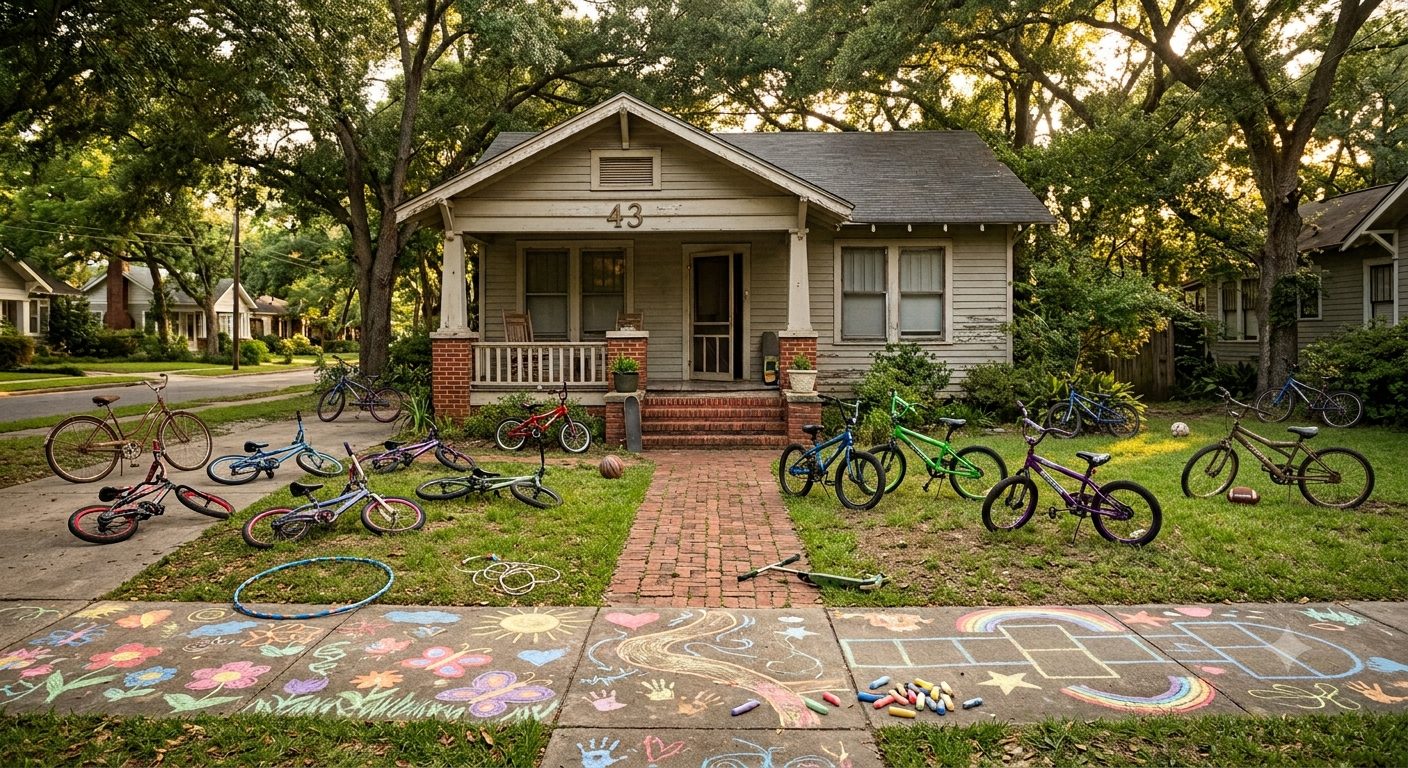
There was a time when every neighborhood had that house.

The one you could knock on for a cup of sugar.

Or jumper cables.

Or a ladder.

Or because your kids wanted to play with theirs.

You didn’t need permission.

You just knocked.

Today, an unexpected knock almost feels strange.

We know our neighbors’ Wi-Fi names better than we know their actual names.

Did we become safer…

Or just more isolated?

We blame technology, but maybe texting wasn’t the cause.

Maybe it simply revealed something we were already losing.

That’s not really about phones.

It’s about trust.

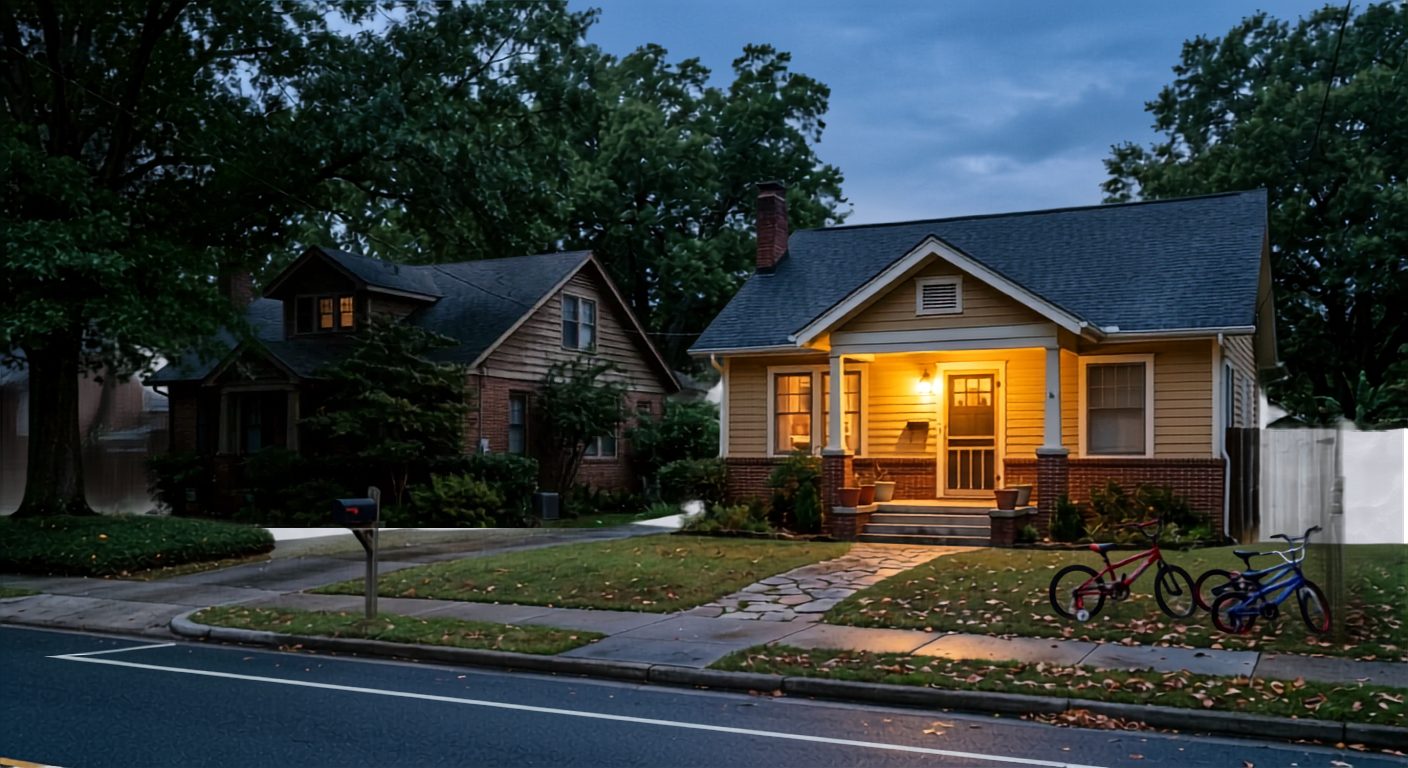
Somewhere along the way, neighbors became strangers who happened to share a property line.

Maybe that’s why Every House Has a Story. Some of the best stories were never about the house itself. They were about the people who lived around it.

Organizations like NeighborWorks America continue to remind us that strong neighborhoods are built through relationships, local involvement, and neighbors who know one another.

As we reflect on America at 250, it’s worth remembering that our strongest communities have never been built by streets or subdivisions.

They’ve always been built one neighbor at a time.

They’ve always been built one neighbor at a time.

So here’s a question.

If your car wouldn’t start tomorrow morning, would you know which door to knock on?


And just as important…

Would anyone know they could knock on yours?

BSTC BSTC EditorialHampton Roads Communities July 8, 2026

The Oldest Living Thing on Your Property

The Oldest Living Thing on Your Property

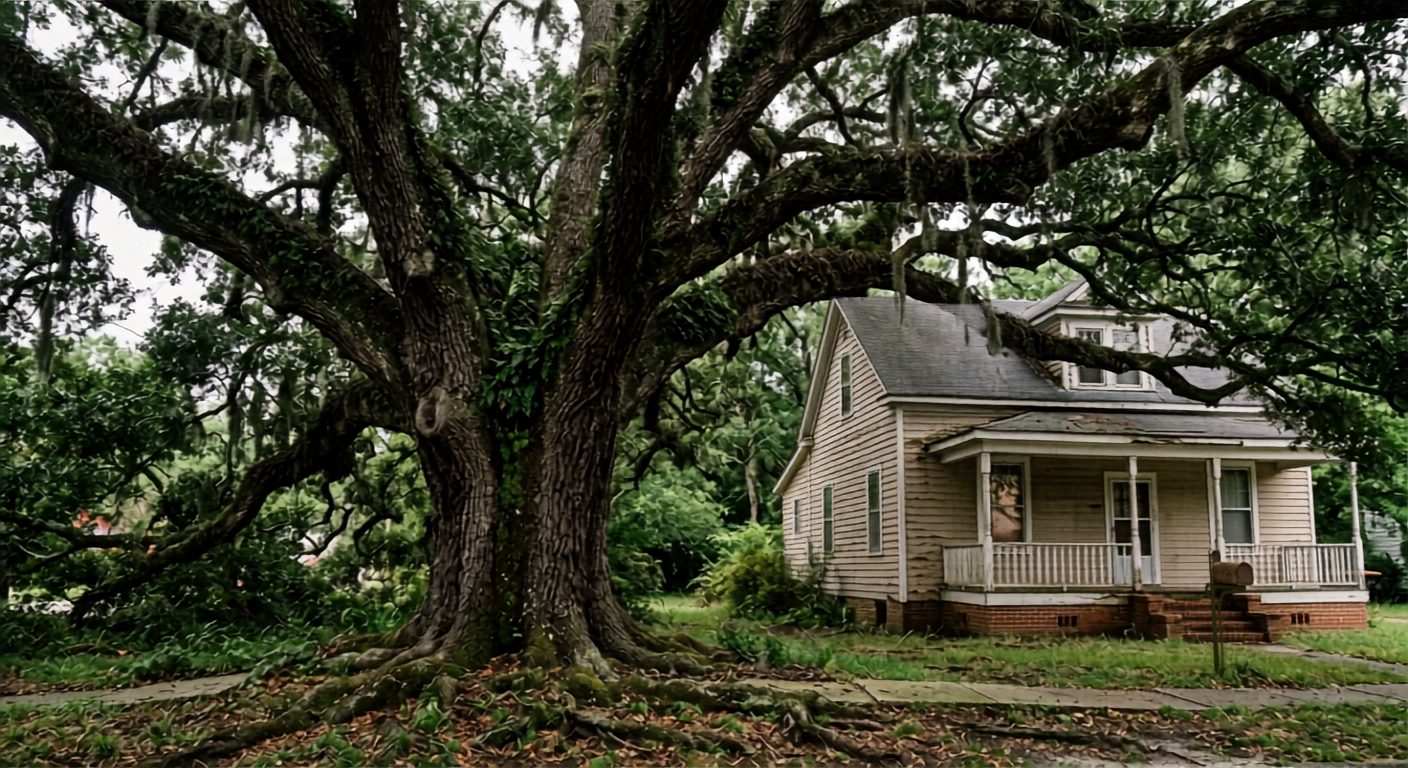
What if the oldest resident on your property isn’t your home, but the life that was there long before it?

Look around your property. The oldest living thing on your property probably isn’t your house.

It isn’t the fence.

It isn’t the mailbox.

It isn’t even you.

It’s probably the tree.

It was there before your driveway.

Before your closing documents.

Before your address existed.

Before anyone called this land “yours.”

And yet…

We can decide its fate in a single afternoon.

Who gave us that right?

Maybe no one did.

We simply assumed we had it.

The tree never asked to be useful.

Yet somehow it is.

It cools neighborhoods on the hottest summer days.

It cleans the air we breathe.

Its roots hold the soil together after heavy rains.

The U.S. Environmental Protection Agency explains that trees help improve air quality, reduce stormwater runoff, and cool urban environments.

Its leaves return nutrients back to the earth.

Its branches become homes for birds, squirrels, insects, and countless forms of life we rarely notice.

Children climb it.

Families gather beneath it.

Neighbors pause to admire it.

It quietly makes life around it possible.

The Arbor Day Foundation also notes that mature trees provide environmental, economic, and community benefits that extend well beyond curb appeal.

Generations grow up with it in the background, never realizing it has been watching over them all along.

And after decades, sometimes centuries, of giving…

We decide its life is over.

It blocks the view from a new deck.

It drops too many leaves.

Its roots might interfere with landscaping.

Because it no longer fits the aesthetic.

We Call It Improvement

The tree never argued with us.

It never asked anything from us.

It simply existed.

And somehow…

The oldest living thing on the property became the obstacle instead of one of its greatest assets.

We often describe this as “improving” the property.

The tree never gets a vote.

We clear the lot.

Open the view.

Clean up the landscape.

Listen to those words.

They imply that nature was the problem.

That somehow a mature oak became an inconvenience instead of the reason the land was beautiful in the first place.

Every place carries a story long before we become part of it. That’s an idea I explored in Every House Has a Story. Does Every City.

Ownership or Stewardship?

Buying land gives us legal rights.

No one disputes that.

If a tree is diseased, threatening a home, damaging a foundation, or creating a genuine safety hazard, removing it can be the responsible decision.

Property rights matter.

Protecting your family matters.

This isn’t an argument that every tree should remain standing forever.

But maybe that’s not the real question.

Maybe the real question is whether we’ve confused ownership with stewardship.

A deed says you own the property.

It doesn’t mean you created the ecosystem.

That tree may have stood there for 250 years.

Long before your home existed.

Long before property lines were drawn.

Long before your name ever appeared on a deed.

It survived hurricanes.

Lightning strikes.

Droughts.

Changing seasons.

Entire generations came and went beneath its branches.

A Tree Never Gets to Appeal

Imagine living for 250 years.

Watching children become grandparents.

Providing shade to people you’ll never know.

Filtering the air without asking for recognition.

Holding the soil together after every storm.

Giving life simply by being alive.

Only to lose your life because someone wanted a different landscaping plan.

The tree never gets to explain its value.

It never gets to defend itself.

It never gets to appeal our decision.

We are judge.

We are jury.

We are executioner.

And somehow…

We call it an improvement.

The Cost of a Better View

Here’s the uncomfortable contradiction.

We say we love nature.

Then we remove it because it blocks our view.

We want wildlife.

Then we eliminate the places where wildlife lives.

We complain that our neighborhoods are getting hotter.

Then we cut down the very shade that kept them cooler.

We replace a living ecosystem with decorative landscaping and call it progress.

Research from the U.S. Forest Service shows that urban forests support biodiversity, improve public health, reduce urban heat, and make communities more resilient.

We spend thousands of dollars planting young ornamental trees after removing mature ones that could never truly be replaced.

We call it landscaping.

Nature might call it something else.

Of course, there are times when removing a tree is the responsible choice.

Some are diseased.

Some become dangerous.

Some threaten homes and the people inside them.

Sometimes the right decision is also the hardest one.

This isn’t an argument against every chainsaw.

It’s an invitation to think more carefully before we start one.

Progress has given us extraordinary things.

Safer homes.

Stronger communities.

Modern infrastructure.

None of those are inherently wrong.

But progress is worth examining when it quietly teaches us that the oldest living thing on a piece of land is also the easiest thing to erase.

Perhaps the measure of a beautiful neighborhood isn’t how perfectly every yard is manicured.

Perhaps it’s whether we’ve learned to build around what was already beautiful.

One Final Question

Because once a 250-year-old tree is gone…

No amount of money can buy back 250 years.

A living thing that took a century, maybe two, to become what it was.

Gone before dinner.

Just because we can…

Does that mean we should?

Hampton Roads CommunitiesReal Estate Insights July 7, 2026

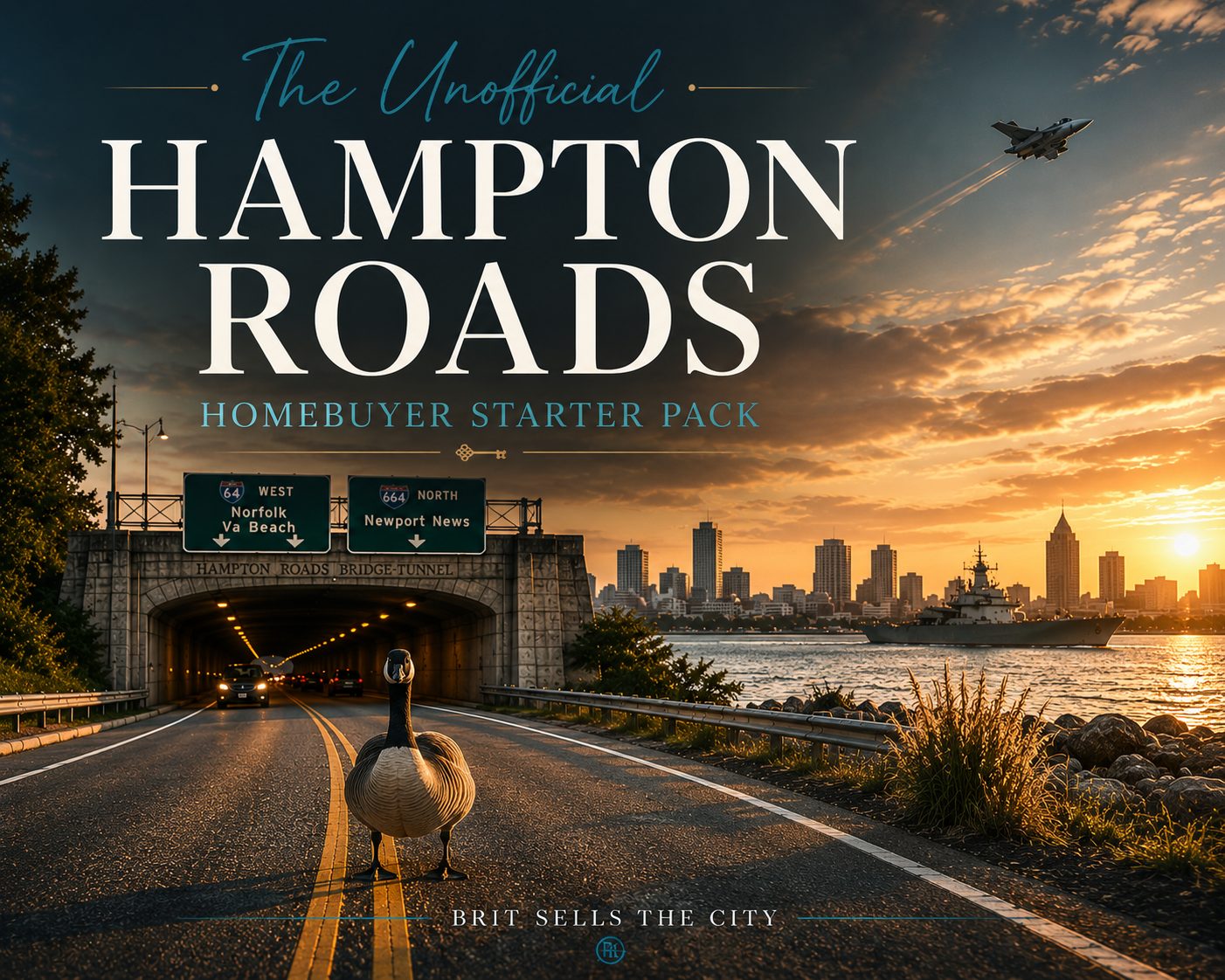
The Unofficial Hampton Roads Homebuyer Starter Pack

The Unofficial Hampton Roads Homebuyer Starter Pack

“Let me tell you why my grandma called this pneumonia weather.”

If you grew up in Hampton Roads, somebody probably told you not to go outside without something covering your nape.

Mine did.

Every time the weather couldn’t make up its mind.

I thought she was just being Grandma.

Until one day I drove to Virginia Beach.

The tunnel was clear on the way there.

I handled my business.

On the way back…

Traffic was backed up.

The weather had completely changed.

It started raining.

Then it hailed.

Before I made it home…

It was snowing.

All I could hear was my grandma saying,

“Pneumonia weather.”

That’s Hampton Roads.

If you’re buying a home in Hampton Roads, there are a few things nobody puts in the relocation guide.

So… consider this your unofficial Hampton Roads Homebuyer Starter Pack.

Welcome to Hampton Roads

Let Me Tell You Why My Grandma Called This “Pneumonia Weather” | Hampton Roads Weather Video

Moving to Hampton Roads: What Nobody Tells You

Summer Isn’t Measured by the Temperature

It’s measured by the heat index.

Around here, 94 degrees doesn’t sound nearly as impressive as,

“Feels like 110.”

That’s the number everybody checks.

And there’s always somebody outside saying,

“It ain’t that hot.”

Think I’m exaggerating? Check the latest forecasts from the National Weather Service Wakefield Office. Around here, the weather has a mind of its own.

Pick Your Tunnel

“How far is Virginia Beach?”

About 20 minutes…

Unless you get stopped by the Tunnel Monster.

“What tunnel should I take?”

Ask five locals.

You’ll get six different answers.

Construction & Driving

Construction isn’t a season.

It’s a lifestyle.

At this point…

The orange barrels are part of the scenery.

Then there’s the driving.

Everybody knows which city has the worst drivers.

According to everyone…

It’s always the next city over.

The Sound of Freedom in Hampton Roads

You’re in the middle of a conversation.

A fighter jet flies overhead.

You stop talking.

Everybody else keeps talking.

Wait until it breaks the sound barrier.

Now everybody stops talking.

Local Food Rules

You leave Virginia.

You sit down at a Mexican restaurant.

The chips hit the table.

“Can I get some white sauce?”

The waiter looks at you.

“…Some what?”

That’s when you realize white sauce is a Hampton Roads thing.

Then somebody asks,

“Who’s got the best yock?”

Congratulations.

You just started the Yock Wars.

Steamed.

Fried.

Everybody’s got a crab spot.

And nobody’s changing their mind.

Sky Gangsters

You’re already running late.

The light finally turns green.

Then the Sky Gangsters decide they’re crossing.

They don’t run. Don’t acknowledge you.
They just keep walking.
No hurry.
Looking you dead in the eye like they wish you would.

The disrespect is part of the experience.

The mosquitoes don’t bite.

They attack.

Buckroe Beach jellyfish somehow know the exact weekend you planned your beach trip.

And every few months…

Somebody spots a coyote.

Within minutes it’s on Facebook.

Then Nextdoor.

By the end of the day somebody swears they saw a bear wandering over from the Great Dismal Swamp.

If you’re new to the area, Visit Hampton is a great place to explore local beaches, events, restaurants, and attractions.

Hometown Legends

Around here…

You don’t have to say their full names.

Bubba Chuck.

Ookie.

Missy.

Timbaland.

Magoo.

Pharrell.

If you know…

You’re probably from Hampton Roads.

Local Directions

GPS will get you there.

Locals will confuse you first.

“Meet me by Coliseum Mall.”

“No…

PTC.”

Same place.

Different generation.

Everybody Has an Opinion

“What’s the best city?”

Depends who you ask.

“The best beach?”

Depends who you ask.

“The best seafood?”

Depends who you ask.

The quickest way through the tunnel?

Now you’ve started an argument.

Around here…

Everybody’s got an opinion.

And they’re all convinced they’re right.

Whether you’re moving to Hampton Roads across town or across the water, there’s always something new to discover throughout Hampton Roads and the Commonwealth. Virginia Tourism is a great place to start planning your next local adventure.

Local News

Whether you agree with her…

Or not…

You don’t even have to follow her.

Somehow…

She still finds you.

And before you know it…

You’re watching another live that starts “It’s a sad day here in Hampton Roads…” 

Congratulations

If you laughed at more than half of these…

You’re either already a Hampton Roads local…

…or you’re about to become one.

Just remember…

When the weather changes three times before you make it home…

You’ll know exactly what my grandma meant by…

“Pneumonia weather.”

Now it’s your turn.

What belongs in the Moving to Hampton Roads Starter Pack?

Why?

BSTC BSTC EditorialHampton Roads Communities July 5, 2026

Every House Has a Story. So Does Every City.

Every House Has a Story. So Does Every City.

The places we remember aren’t defined by their floor plans. They’re defined by the lives we build inside them.

“Every home remembers something. The question is, what will yours remember about you?”

Why does homeownership matter?

Think about the house you grew up in. What’s the first thing you remembered? It probably wasn’t the square footage.

Maybe it was Saturday mornings that smelled like pancakes. The kitchen table where Johnny somehow always had five apples in every math problem. The hallway where your parents told you to stop running.

Funny, isn’t it?

The places we remember aren’t defined by the house. They’re defined by the life that happened inside it. Places shape us in ways we don’t always recognize. I explored that idea from a different perspective in America at 250: The United States Is 250. This Land Is Much Older.

As Hampton gets ready for the  Hampton Storytelling Festival⁠, I’ve been thinking about all the stories that will never be told on a stage. The ones unfolding quietly behind front doors across our neighborhoods.

Every neighborhood has its characters.

The neighbor who stopped by for five minutes and somehow stayed until the porch light came on. The kids who played outside until someone finally yelled, “Come home!”

Years later, those same kids will smile and begin a story with four simple words.

“When I was young…”

People often ask what I notice first when I walk into a house.

Honestly, it usually isn’t the kitchen. It isn’t the paint color. It isn’t even the layout.

I notice the evidence.

Sometimes the most important things in a home are the ones buyers almost overlook. I wrote more about that in Pretty Doesn’t Pay for Repairs.

The handprints on the wall. The scuff marks by the back door. The tiny nail holes where family photos once hung. The pencil marks hidden in a hallway where someone measured a growing child year after year.

I’ve walked through hundreds of homes, but I’ve never walked through one that didn’t leave something behind.

To some people, those are imperfections.

To me, they’re evidence that life happened here.

I’ll never forget walking into a home after the family had moved out. The nursery was still painted the most beautiful shade of teal with white clouds and hot air balloons floating across the walls.

The furniture was gone.

But Ella’s name was still there.

The room was empty.

It didn’t feel vacant.

It felt like love had simply changed addresses.

Maybe the biggest mistake we’ve made is believing homeownership is about the house at all.

Buying a home is rarely just a financial decision. As I shared in The Group Chat Killed the Deal, emotions and outside influences often shape our biggest decisions far more than we realize.

Yes, it’s an investment. Yes, building equity matters.

The Consumer Financial Protection Bureau also provides helpful resources explaining the financial benefits and responsibilities of homeownership for first-time buyers.

But that’s not why children argue over who gets which bedroom before the paperwork is signed.

It’s not why people slow down when they drive past the home they grew up in.

It’s because a home gives life a place to unfold. A place where traditions begin. Where neighbors become lifelong friends.

Where ordinary Tuesdays quietly become unforgettable memories.

Maybe that’s why homeownership matters more than we often realize

Why Homeownership Matters

The question was never, “Who owns this house?”
It was always, “Who will this home help become?”
One day another family will paint these walls.
They’ll hang their own pictures.
They’ll celebrate birthdays.
They’ll comfort each other through difficult days.
They’ll laugh around the dinner table.
They’ll leave behind their own evidence.
Because that’s what homes do.
They quietly witness ordinary moments until one day those moments become someone’s favorite memories.
The places we remember aren’t defined by their floor plans.
They’re defined by the lives we build inside them.
Because every family deserves a place where their story can unfold.

This is why Homeownership Matters to me.

As a Virginia Housing Certified Homebuyer Education Trainer, I encourage anyone considering homeownership to explore the educational resources available through Virginia Housing before beginning the process.

BSTC BSTC EditorialHampton Roads Communities July 4, 2026

America at 250: One Nation. Millions of Stories.

America at 250: One Nation. Millions of Stories

Exploring freedom, history, home, and the American Dream through the unique perspective of Hampton Roads.

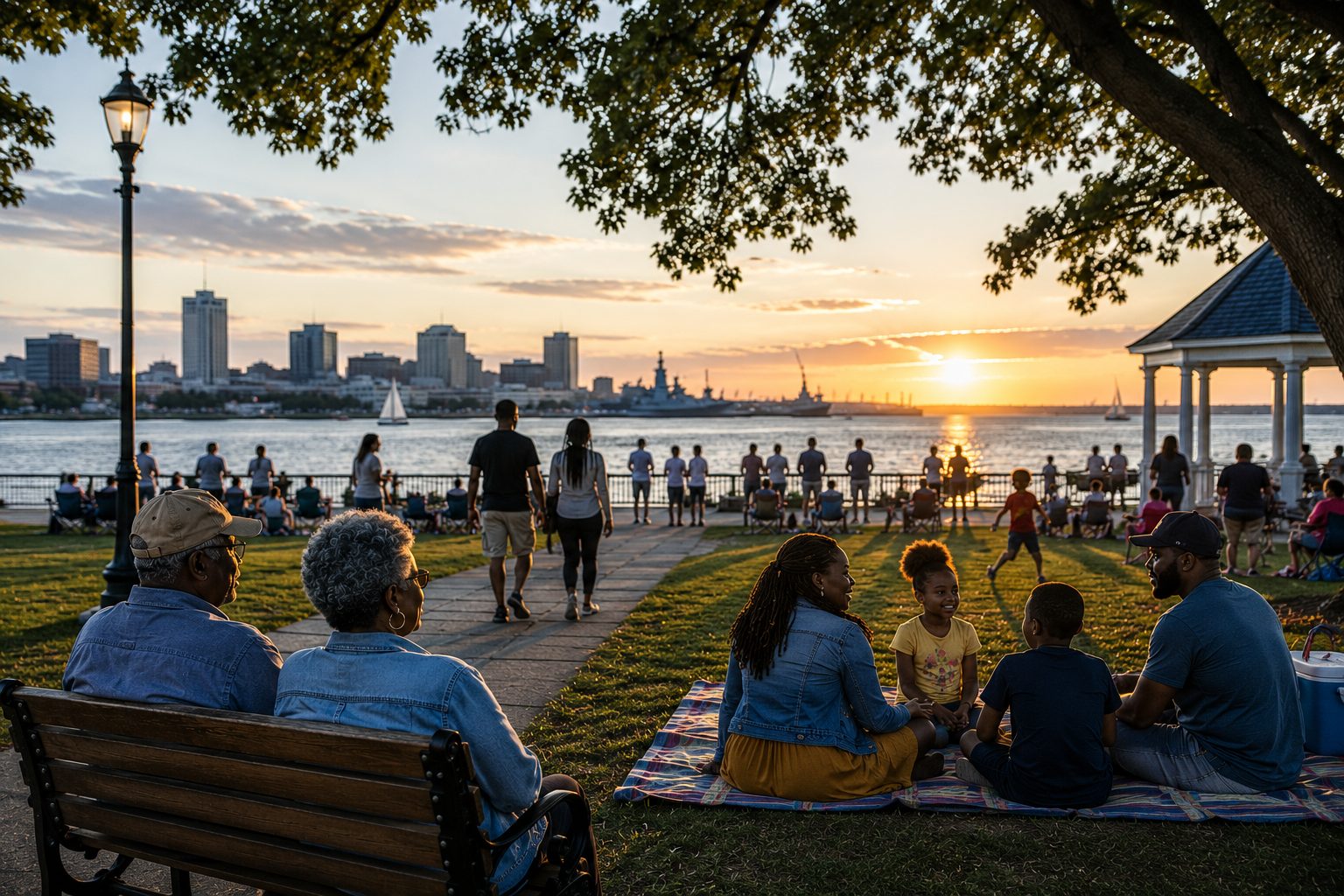
Families of different generations and backgrounds gather at a Hampton Roads waterfront park during sunset, reflecting on community, shared experiences, and America’s 250th anniversary.

A peaceful evening on the Hampton Roads waterfront reminds us that while Americans may experience freedom through different perspectives, we continue to share the same communities, history, and future.

Before the Fireworks…

This isn’t an article about telling you what America should mean.

It’s an invitation to consider why it means something different to each of us.

America at 250 is more than a national anniversary.

It’s an opportunity to reflect on where we’ve been, where we are, and where we’re going together.

Here in Hampton Roads, children will wave sparklers through the summer air.

Military families will reunite after months apart.

Some veterans will enjoy the fireworks.

Others may choose a quieter evening because the sounds bring back memories most of us will never fully understand.

Neighbors who haven’t seen each other in weeks will reconnect over burgers, fried fish, potato salads of every family recipe, watermelon, and laughter.

Some will proudly wear red, white, and blue.

Others will arrive in crisp all-white outfits because that’s simply what celebration has always looked like in their family.

Some families will celebrate their very first Fourth of July in a new home.

Others will return to a house that’s held generations of memories.

A recently naturalized citizen may quietly celebrate their first Independence Day as an American.

For many Indigenous families, this day may also be a reminder of histories that long predate the founding of the United States.

Some Black families may celebrate both the progress made and the resilience that carried generations toward promises that took time to become reality.

Some tables will be filled with hamburgers and hot dogs.

Others will feature fried fish, barbecue, and recipes passed down through generations.

Potato salads made a dozen different ways will sit beside baked beans, macaroni and cheese, peach cobbler, and apple pie.

Somewhere, a deck of Spades is already being shuffled.

Somewhere else, the family grill master is tending the charcoal in those familiar leather cookout sandals.

Children don’t notice any of this.

They’re too busy laughing, running, and waiting for the fireworks to begin.

By sunset, every family will have arrived carrying a different story.

Tonight, millions of Americans will look up at the very same sky.

Yet many will be celebrating something entirely different.

“America isn’t one story. It’s millions of stories unfolding under one flag.”

America at 250: The United States Is 250. This Land Is Much Older.

This year marks 250 years since the signing of the Declaration of Independence.

That’s worth celebrating.

Across Virginia, communities are commemorating America’s 250th anniversary through the VA250 initiative, honoring the people, places, and events that have shaped our nation’s story while looking toward the future.

It’s also worth remembering that the history of this land didn’t begin in 1776.

Long before there was a United States…

Before Jamestown.

Before Williamsburg.

Before Yorktown.

The Declaration of Independence gave birth to the United States.

It did not give birth to this continent. Recognizing that doesn’t diminish America’s founding.

It deepens our understanding of it. History isn’t a competition. It’s a conversation.

The more stories we’re willing to hear, the more complete our understanding becomes.

Perhaps that’s what America at 250 invites us to remember…

We Don’t All Inherit America the Same Way

None of us choose the first version of America we’re introduced to.

We inherit it in countless ways.

From parents and grandparents. Through teachers, military service, faith, neighborhoods, and family traditions.

Long before we form our own opinions, those experiences begin shaping what America means to us.

Some inherit stories of opportunity. Others inherit stories of exclusion. Many inherit both.

Understanding those different experiences doesn’t divide us. It helps us understand one another.

Freedom Changes Throughout Life

Freedom is an interesting word.

We celebrate it every July.

We defend it. We debate it. We teach it.

But eventually…

Most of us try to build it.

Ask a child what freedom means.

They’ll probably tell you it means staying up late to watch fireworks.

Ask a teenager.

Freedom may mean getting a driver’s license.

Ask a college graduate.

Freedom may mean landing their first career.

Ask a service member.

Freedom may mean protecting something greater than themselves.

Ask a parent.

Freedom often looks like stability.

Ask someone nearing retirement.

Freedom may simply mean sitting on a porch they’ve spent decades working to own.

Freedom doesn’t stay the same.

Neither does the American Dream.

The American Dream

Few ideas have shaped America more than the American Dream.

Yet ask ten people to define it…

You’ll probably hear ten different answers.

For some, it’s starting a business.

For others, it’s serving their country.

For others, it’s becoming the first college graduate in the family.

For many immigrant families, it’s the opportunity to begin again.

For many military families, it’s finally putting down roots after years of moving.

For many Black families, the American Dream carries another layer of meaning.

For generations, discriminatory housing practices, including redlining, restrictive covenants, and unequal access to financing, prevented many Black Americans from fully participating in one of the nation’s greatest pathways to building generational wealth: homeownership.

The effects of those barriers didn’t disappear overnight.

That history doesn’t diminish anyone else’s American Dream.

It helps explain why homeownership represents something deeply personal for so many families today. The path to homeownership continues to evolve, which is why staying informed about changes affecting Virginia buyers and homeowners matters.

If you’re planning to buy, sell, or already own a home in Virginia, my article,

Virginia Housing Laws Changing July 1, 2026, explains how recent updates may affect you.

Progress. Security. Legacy.

The opportunity to leave the next generation with more choices than the one before.

History doesn’t determine our future.

But it often explains our starting point.

The American Dream has never looked exactly the same for everyone.

Yet its heartbeat has remained remarkably consistent.

Hope. Opportunity. Legacy.

And the belief that tomorrow can be better than today.

“The American Dream isn’t about everyone having the same journey. It’s about everyone having the opportunity to write their own chapter.”

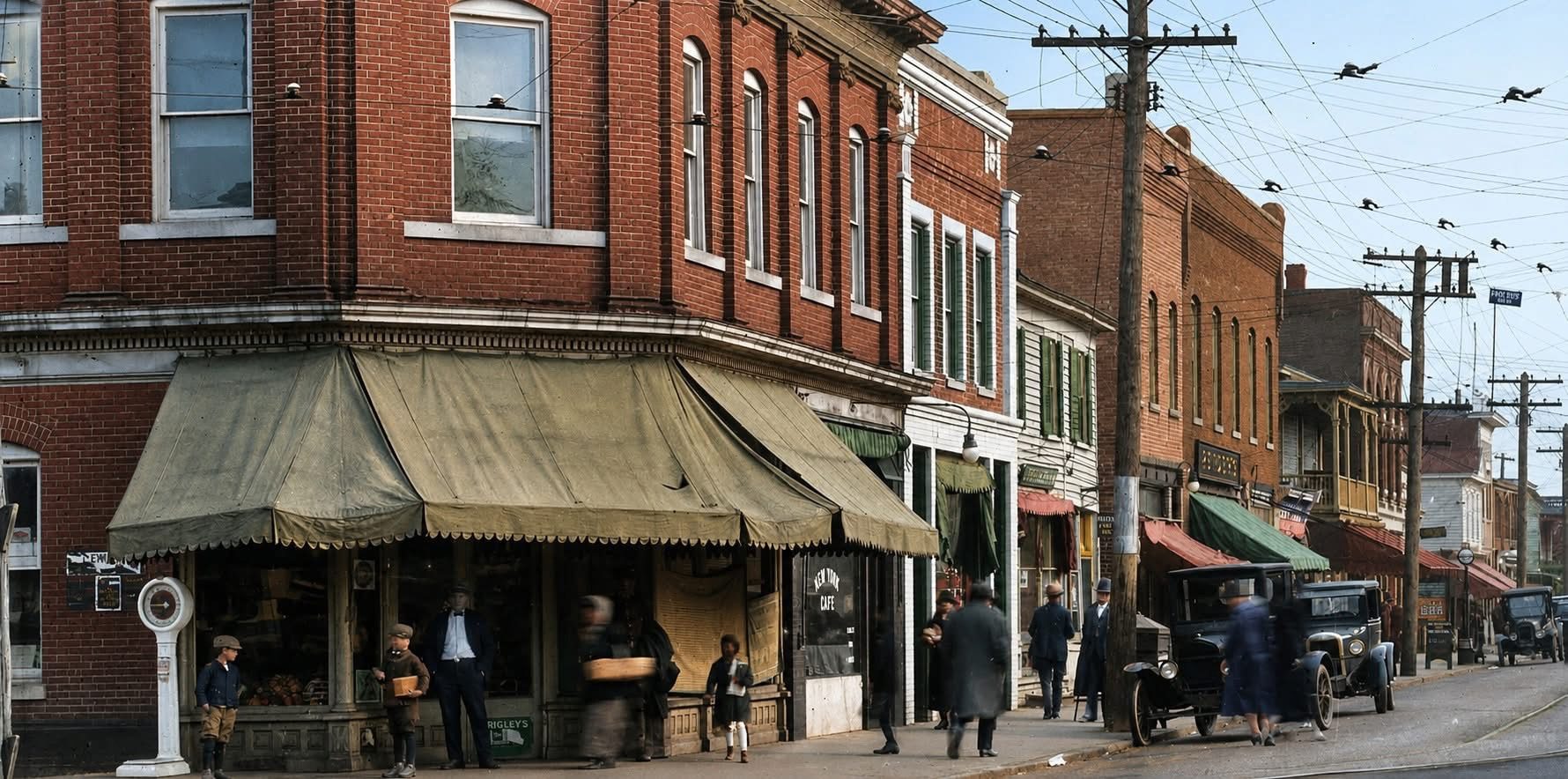
Historic Queen Street in Downtown Hampton, Virginia, showing early 20th-century brick storefronts, pedestrians, and automobiles along one of Hampton Roads’ oldest commercial corridors.

Communities like Hampton have witnessed generations of families building traditions, businesses, and memories that continue to shape Hampton Roads today.

Why Hampton Roads Tells This Story So Well

There are few places in America where so many chapters of our nation’s story intersect the way they do here in Hampton Roads.

Long before the United States existed, Indigenous communities lived, traded, and thrived throughout this region.

Centuries later, the first permanent English settlement took root nearby.

Fort Monroe became known as “Freedom’s Fortress,” where thousands of enslaved people sought refuge during the Civil War.

Our military installations continue to welcome families from every corner of the country and around the world.

Every deployment.

Every homecoming.

Every PCS move.

Every retirement.

Adds another chapter to Hampton Roads’ story.

Walk through Phoebus.

Stand along the Downtown Hampton waterfront.

Visit Fort Monroe.

Drive past the shipyards.

Watch the sun set over the Elizabeth River.

You’ll find reminders that history isn’t something we only read about.

It’s something we live alongside every day.

Perhaps that’s why this region feels so uniquely American.

Not because everyone here shares the same story.

But because so many different stories continue to meet here.

Communities grow stronger when people bring their own histories, traditions, and perspectives to the same table.

Hampton Roads has been doing exactly that for generations.

Home Is Where America’s Story Continues

Every generation inherits a story.

Every generation adds to it.

For some, that story begins in a house their grandparents built decades ago.

For others, it begins the day they finally receive the keys to their very first home.

Homes become more than walls and roofs.

They become the places where birthdays are celebrated.

Holiday traditions are created.

Family recipes are passed from one generation to the next.

Children grow taller, one pencil mark at a time on a doorway.

Neighbors become lifelong friends.

Grandparents become storytellers.

One day, today’s memories become tomorrow’s history.

Perhaps that’s why homeownership has always represented something larger than real estate.

It represents stability. Responsibility. Opportunity.

And for many families…

The chance to build something that lasts beyond themselves.

A home isn’t the American Dream for everyone.

But for millions of families, it’s one of the places where that dream continues to unfold.

The American story isn’t finished.

Neither is yours.


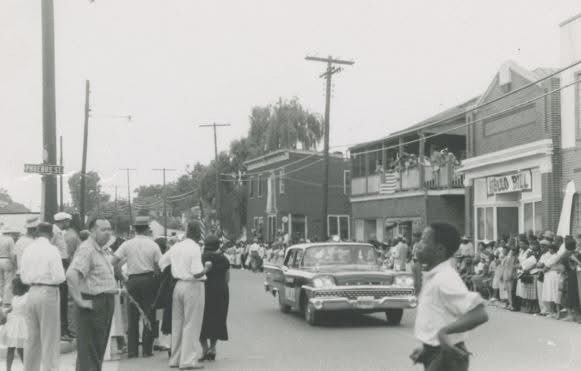
Historic Fourth of July parade in Phoebus, Hampton, Virginia, in 1959, with families lining the streets to celebrate Independence Day together.

Families gather along Phoebus Street for a Fourth of July parade in 1959. While each generation celebrates differently, the traditions of community, remembrance, and hope continue to connect us.
Photo Credit: Historic photo courtesy of the Hampton History Museum.

BSTC Perspective

As someone who serves buyers and sellers throughout Hampton Roads, I’ve learned that every home has two stories.

The one recorded in public records…

And the one lived inside its walls.

The second story is always the most meaningful.

This Independence Day, whether you’re celebrating in a home you’ve loved for decades, moving into your very first place, serving far from home, or simply gathering with the people who matter most…

I hope you find a moment to appreciate the story you’re helping write.

Because America’s story isn’t only found in history books.

It’s still being written.

One family.

One neighborhood.

One home at a time.

America at 250 reminds us that every generation adds another chapter.

Continue the Conversation

Every family has a story. Every home becomes part of one.

As we celebrate America’s 250th anniversary, I’d love to hear what the American Dream means to you.

Whether you’re putting down roots for the first time, planning your next move, or simply reflecting on where your journey has taken you, your story matters.

If you’re thinking about buying, selling, or investing in Hampton Roads, I’m always happy to be a resource. Real estate is about more than transactions. It’s about helping people build the next chapter of their lives.

Explore more BSTC articles:

Ready for your next chapter?

Whether you’re buying your first home, selling a place filled with memories, or simply exploring your options, I’d be honored to help you navigate the journey.

Visit BritSellsTheCity.com or contact me anytime.

Buyer EducationMarket Updates July 4, 2026

Could Someone Steal Your Home? Virginia Deed Fraud

Could Someone Steal Your Home Without Stepping Inside?

What Virginia Homeowners Need to Know About Deed Fraud

Most homeowners worry about rising insurance premiums, property taxes, or mortgage rates.

Very few worry about someone stealing their home. Yet Virginia deed fraud is becoming an increasingly important concern for homeowners.

However, Virginia deed fraud is becoming a growing concern for homeowners and first-time buyers alike.

Not physically.

Legally.

On paper.

It sounds absurd until you realize it is already happening across the country.

That is exactly why Virginia launched VA Deed Alert, a free tool designed to help homeowners catch suspicious property filings earlier.

If you own property in Virginia or plan to someday, this is worth paying attention to.

Especially if you are a first-time buyer who assumes closing on a home means the hard part is over.

Sometimes, protecting ownership matters just as much as obtaining it.

What Is Deed Fraud?

Deed fraud happens when someone illegally files documents that make it appear they own property they do not actually own.

For first-time buyers, let’s simplify that.

Your deed is the legal document that proves ownership of your property.

Think of it as one of the core documents establishing:

This home belongs to you.

Deed fraud happens when someone attempts to manipulate that ownership through fraudulent paperwork.

That can include:

  • forged deeds
  • fake notarizations
  • fraudulent ownership transfers
  • unauthorized liens
  • seller impersonation schemes

In some cases, criminals attempt to transfer ownership.

In others, they try to sell, rent, or borrow against a property they do not legally control.

Yes, really.

And the scary part?

Property records are public.

That transparency helps real estate function efficiently.

But it also creates opportunity for bad actors.

Scammers can research properties, identify potential targets, and look for vulnerabilities.

Predators love silence.

Why This Matters Beyond Virginia

While this is a national issue, Virginia deed fraud deserves local attention…

Deed fraud, title theft, and seller impersonation schemes are becoming a growing concern across the United States as property values rise and fraud tactics become more sophisticated.

According to the  FBI Boston Field Office⁠, quitclaim deed fraud increasingly targets:

  • vacant land
  • second homes
  • inherited property
  • mortgage-free homes

Why these properties?

Because criminals look for assets with:

  • less oversight
  • fewer physical visits
  • slower communication
  • delayed detection

In other words, they go where no one is watching.

Modern fraud can involve:

  • identity theft
  • stolen personal information
  • forged IDs
  • fraudulent notarizations
  • AI-assisted document manipulation
  • exploitation of public records

Technology has lowered the barrier to fraud.

That should concern every homeowner.

This Is Not Theoretical

This is not some far-fetched scam from a movie.

It is already happening.

In North Carolina, a homeowner discovered his vacation property had allegedly been transferred through a forged quitclaim deed and sold without his knowledge.

Estimated market value?

Roughly $300,000.

Recorded sale price?

Just $9,000.

The owner said:

“I never sold it and never will.”

One fraudulent filing created a massive legal mess involving ownership rights, title disputes, and litigation.

That is what makes deed fraud so dangerous.

The paperwork can appear legitimate until someone looks closely.

What Is VA Deed Alert?

Virginia’s new VA Deed Alert program is a free property monitoring system designed to notify homeowners when documents are recorded involving their name or property.

Think of it like fraud alerts for your credit.

Except for your house.

If a deed, lien, or related document gets recorded, the system sends an alert so you can investigate quickly.

That early warning matters.

Because when fraud happens, time matters.

The sooner suspicious activity is detected, the faster you can respond.

A Quick Devil’s Advocate Take

VA Deed Alert is a valuable tool, but it is not a magic shield.

Alerts can improve awareness, yet awareness alone does not prevent fraud. Homeowners still need to monitor mail, tax notices, title activity, and personal data security.

There is also a larger issue at play.

Real estate depends on public records for transparency and market efficiency, but that same transparency makes ownership information accessible to bad actors.

In many ways, deed fraud highlights a growing modern challenge:

How do we preserve public access while better protecting privacy and ownership security?

Why Virginia’s Response Matters

Virginia’s rollout reflects a national shift toward proactive fraud detection.

This is also part of a broader wave of policy changes affecting homeowners, including several recent updates I covered in my Virginia Housing Laws 2026 guide⁠

Instead of waiting for victims to discover fraud months later, alert systems aim to create earlier awareness.

That matters because once fraudulent documents are recorded, reversing the damage can become expensive, time-consuming, and legally complex.

An important distinction many homeowners may not realize is this:

Recording a document is not the same as verifying the legitimacy of the transaction behind it.

In other words, just because paperwork gets filed does not automatically mean the underlying transfer was lawful.

That gap is exactly what fraudsters attempt to exploit.

Which is why monitoring matters.

Is VA Deed Alert Available Everywhere?

Not yet.

And this is the detail many homeowners may miss.

The program is rolling out statewide, but each locality must opt in through its Circuit Court Clerk.

That means availability varies depending on where your property is located.

For homeowners in Hampton Roads, it is worth checking whether your local court has joined.

How to Protect Yourself Right Now

Even if your locality has not fully adopted VA Deed Alert yet, there are practical ways to reduce risk.

1. Register for VA Deed Alert if Available

Official system:
VA Deed Alert Registration⁠

2. Monitor Public Records

Periodically check deed records with your local clerk’s office.

3. Pay Attention to Strange Mail

Unexpected notices involving liens, ownership changes, loan statements, or tax issues should never be ignored.

4. Watch Higher-Risk Properties Closely

Vacant land, inherited property, rentals, and mortgage-free homes deserve extra oversight.

5. Protect Your Personal Information

Many fraud schemes begin with identity theft long before the forged deed appears.

My Take as a Real Estate Professional

Real estate is not just about buying and selling.

It is also about protection.

That philosophy is central to how I serve clients at Brit Sells The City⁠

As a first-time buyer, it is easy to think the biggest hurdles are:

  • getting pre-approved
  • winning the offer
  • making it to closing

Those are major milestones.

But homeownership does not end at closing.

Ownership comes with responsibility.

That includes protecting one of the largest assets you may ever own.

Risk exists long after the keys are handed over.

It simply changes.

That includes:

  • title issues
  • wire fraud
  • identity theft
  • deed fraud

Protection is part of ownership.

And education is part of protection.

Final Thoughts

Most people protect their home from visible threats.

They install cameras.
They lock doors.
They buy insurance.

But few think about protecting ownership itself.

That may be one of the biggest blind spots in modern homeownership.

Your home is not just real estate.

For many families, it represents:

  • security
  • stability
  • leverage
  • legacy
  • generational wealth

And increasingly, one of the most dangerous threats to that asset may be invisible.

Not a storm.
Not a fire.
Not a break-in.

A filing.

If you are preparing to buy your first home or want guidance on protecting your real estate investment, connect with BSTC here⁠

Disclaimer

This article is for educational purposes only and should not be considered legal, title, or financial advice. If you suspect fraudulent property activity, contact your local Circuit Court Clerk, title company, and attorney immediately.

Buyer EducationReal Estate Insights July 3, 2026

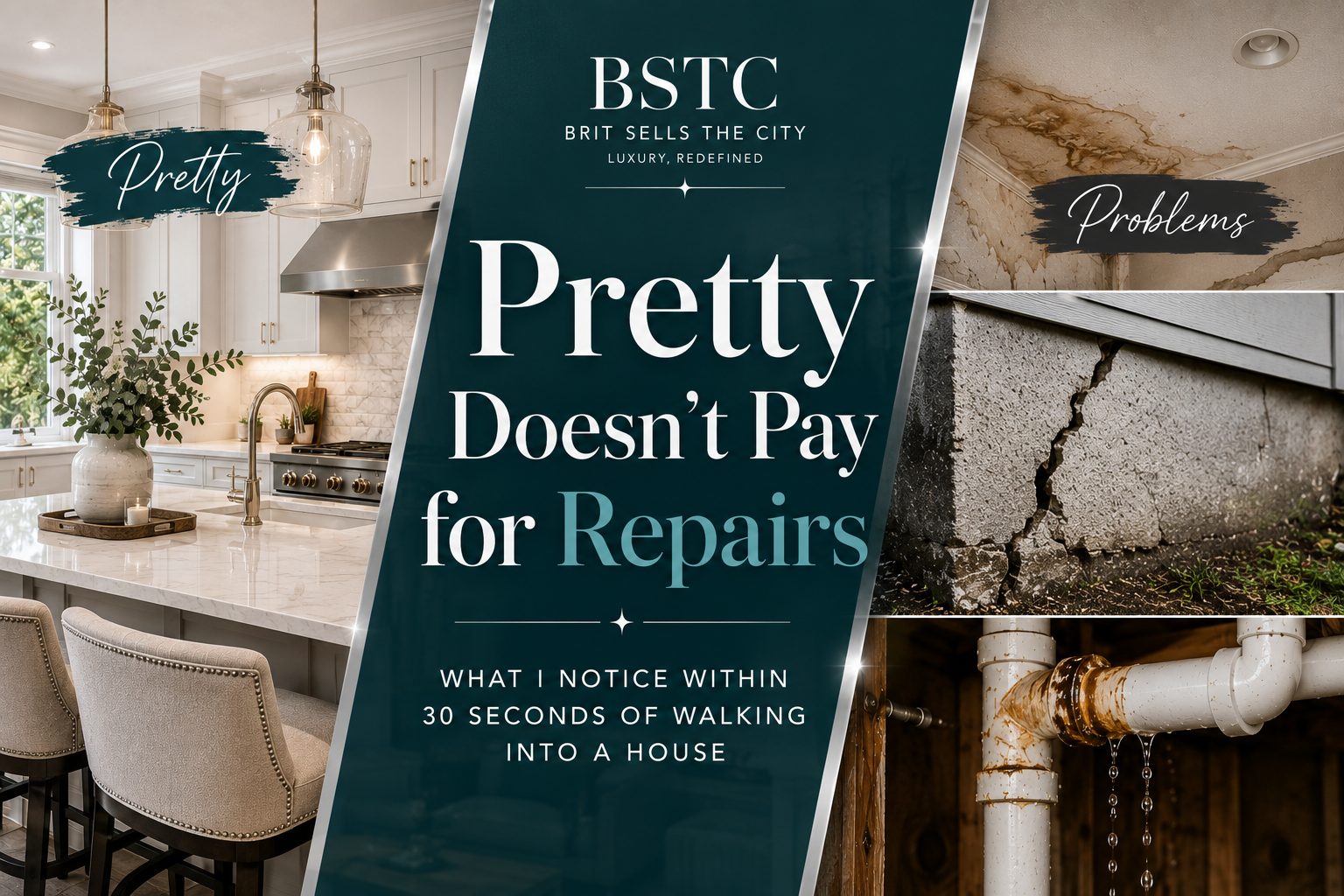
Pretty Doesn’t Pay for Repairs: What I Notice Within 30 Seconds of Walking Into a House

Pretty Doesn’t Pay for Repairs: House Tour Red Flags Every Buyer Should Know

Most buyers walk into a house and notice the pretty first.

The kitchen.
The floors.
The staging.
The natural light.

And I get it. Those things matter.

However, while most buyers are admiring the cosmetic details, I am evaluating something else entirely.

I am looking for what could cost you later.

Because before an inspection report ever comes back, a house is already telling a story.

The real question is whether you know how to read it.


The Smell Hits First

One of the first things I notice is the air.

Heavy candles, plug-ins, diffusers, or overpowering air fresheners can sometimes be harmless.

Sometimes.

Other times, they may be masking something deeper.

This could include moisture, smoke, pet odors, mildew, or mold.

As a result, a house that smells aggressively “clean” often makes me ask more questions, not fewer.

Fresh Cosmetic Fixes in Suspicious Places

Fresh paint is normal.

Fresh paint on one random ceiling patch?

Now I am curious.

I pay close attention to isolated repairs such as:

• patched drywall
• ceiling discoloration
• fresh caulking around windows
• water stains
• recently painted problem areas

Cosmetic repairs are not automatically a red flag.

However, cosmetic repairs that appear intended to conceal larger issues deserve a closer look.

That matters.

Floors Tell the Truth

Additionally, floors rarely lie.

I look for:

• sloping
• soft spots
• uneven transitions
• buckling
• warping

These can sometimes signal underlying concerns that may warrant further evaluation by a licensed home inspector or specialist.

In many cases, the floor tells me more than the seller disclosure ever will.

Deferred Maintenance Leaves Clues

One issue is normal.

A pattern is what matters.

For example, a burned-out light bulb will not concern me.

However, when I start noticing multiple signs of neglect, I begin asking bigger questions.

Were routine maintenance items ignored?

What larger systems may have been overlooked too?

Ultimately, small issues do not always stay small.

Ownership habits often provide insight into future repair risk.

Layout Matters More Than People Think

This surprises many buyers.

A house can be beautiful and still function terribly.

Beyond condition, I also pay attention to flow.

I ask questions like:

Does the layout make sense for daily life?
Is there wasted space?
Will this home still work for your lifestyle in three to five years?
Does the home feel easy to live in?

Pretty attracts attention.

Function affects everyday quality of life.

The Bottom Line

The wrong house does not just cost more to buy.

It can cost more to maintain.
More to repair.
And more to live with once the excitement wears off.

That is why buying a home should never be based on emotion alone.

You need strategy.

You need discernment.

And you need someone who can help you see what others miss.

While no showing can replace a professional home inspection, knowing what to notice early can help buyers make more informed decisions. Buyers should still obtain a professional inspection through a qualified inspector, such as one affiliated with the  American Society of Home Inspectors⁠.

If you are buying in Hampton Roads, make sure you understand what you are walking into before you commit to it.

Want more buyer guidance and market insights? Explore the  BSTC Blog⁠ for additional resources. Ready to buy with confidence? Connect with Brit Sells The City to build a strategy before you tour.

Luxury is not just about price.

Luxury is having an expert who helps protect your investment.

Luxury, Redefined.

Brit Sells The City

Buyer EducationReal Estate Insights July 2, 2026

The Group Chat Killed the Deal…

The Group Chat Killed the Deal…

Why too many opinions can turn a serious buyer into an overwhelmed one.

Some home buying mistakes are obvious.

Overbidding.
Waiving protections.
Ignoring monthly payment realities.

But one of the most overlooked home buying mistakes has nothing to do with price.

It starts with the group chat.

The Group Chat Starts Innocently

You find a house you love.

The kitchen is beautiful.
The layout feels right.
The commute works.
You can actually picture yourself living there.

Excitement kicks in.

So naturally, you send the listing to everyone.

Your mom.
Your dad.
Your best friend.
Your coworker.
Your cousin.
Your auntie.
That one friend who suddenly became a real estate expert after watching three TikToks.

And within minutes, the feedback starts rolling in.

“Why is the kitchen so small?”
“I don’t like open floor plans.”
“The market is going to crash.”
“That seems overpriced.”
“I would wait.”
“I bought in 2019 and paid way less.”

Suddenly, the house you loved 20 minutes ago feels… questionable.

Not because anything changed about the property.

Because too many outside opinions entered the decision-making process.

The psychology nobody talks about

Buying a home is both financial and emotional.

That means buyers are already managing a lot:

  • budget pressure
  • interest rate anxiety
  • fear of making a mistake
  • comparison fatigue
  • emotional attachment

Add 14 conflicting opinions?

Now the brain shifts from excitement to overload.

This is called decision paralysis.

When humans receive too much conflicting input, confidence drops.

Instead of moving forward with clarity, they freeze.

And in real estate, hesitation can be expensive.

The house doesn’t wait for emotional processing.

Another buyer may already be writing an offer.

When Advice Becomes Noise

Most people giving advice genuinely mean well.

They love you.
They want to protect you.
They want you to make a smart choice.

But many of them are evaluating the house through their life, not yours.

Your aunt may hate stairs.

You may love them.

Your dad may think everything is overpriced.

He may also still be mentally living in 2003 pricing.

Your coworker may swear they know the market.

They bought once… seven years ago.

That doesn’t make them wrong.

It just doesn’t make them your decision-maker.

Who Should Buyers Actually Listen To?

Keep your circle small.

When making a major purchase, the most valuable voices are usually:

  • the actual decision-makers buying the home
  • trusted financial advisors
  • an experienced lender
  • a knowledgeable real estate professional

Not the entire group chat.

Too many opinions create noise.

Good guidance creates clarity.

My advice to buyers

Before sending a listing to 14 people, ask yourself:

Am I looking for insight… or validation?

Big difference.

Sometimes buyers already know a house is right.

They just keep polling people until someone introduces doubt.

And doubt spreads fast.

Final thought

The fastest way to turn excitement into confusion?

Send a house to the group chat.

Protect your peace during the home search.

You do not need 14 opinions.

You need a strategy, good data, and the confidence to make informed decisions.

Because sometimes buyers don’t lose the house because someone offered more.

Sometimes

They lose it to the group chat.


Buying a home is not about collecting the most opinions. It is about making informed decisions with the right strategy, the right data, and the right guidance.

If you are preparing to buy, sell, or invest in Hampton Roads, Brit Sells The City is here to help you move with confidence and clarity.

Explore more real estate insights on the BSTC Blog:

Ready to talk strategy? Connect with Brit Sells The City today: https://britsellsthecity.com


Market Updates July 2, 2026

Virginia Housing Laws Changed July 1, 2026: What Buyers, Sellers, Landlords, and Investors Need to Know

Virginia Housing Laws Changed July 1, 2026: What Buyers, Sellers, Landlords, and Investors Need to Know

Virginia housing laws 2026 introduced several important changes affecting landlords, tenants, buyers, sellers, and real estate investors across the Commonwealth.

Legal updates do not always make headlines. However, they can directly affect how real estate is owned, managed, and protected. If you own property, rent a home, manage investments, or plan to buy in Virginia, these changes matter.

What Virginia Housing Laws 2026 Mean for Hampton Roads Real Estate

1. Eviction Notice for Unpaid Rent Increased from 5 Days to 14 Days

One of the biggest changes involves unpaid rent.

Previously, landlords in Virginia could issue a 5 day pay or quit notice when rent was unpaid. Under the new law, that notice period has increased to 14 days.

As a result, tenants now have additional time to pay past due rent before a landlord can move forward with lease termination or eviction proceedings.

For landlords and investors, this change may affect:

• cash flow planning
• reserve requirements
• delinquency management
• lease enforcement timelines

If you own rental property, strong screening and financial reserves are more important than ever.

2. More Rent Payment Options Must Be Available

Virginia has also expanded payment flexibility for tenants.

Many landlords can no longer require rent payments exclusively through online portals, apps, or digital systems. Instead, many must also accept traditional payment methods such as:

• check
• money order
• cashier’s check

This change improves accessibility and reduces barriers for tenants who may not use digital payment platforms.

Property owners and managers should review lease agreements and payment collection procedures to ensure compliance.

3. Restrictions on Certain Fees Tightened

Fee related rules have become stricter.

Additionally, landlords generally cannot charge payment processing fees above actual third party costs. Certain repair, maintenance, and administrative fees are also facing greater scrutiny.

Improper fee structures can create compliance issues and potential disputes.

If you are a landlord, now is a good time to review:

• lease fee schedules
• administrative charges
• payment portal costs
• maintenance billing procedures

Clear policies reduce legal exposure and improve tenant relationships.

4. Military Lease Protections Expanded

This update is especially relevant in Hampton Roads, where military relocation plays a major role in our housing market.

Virginia expanded protections for service members who need to terminate leases early because of qualifying military orders.

This change strengthens tenant protections and better aligns state law with federal military housing protections.

In our region, understanding these protections is essential for:

• landlords
• property managers
• military families
• relocation buyers and sellers

Because Hampton Roads is deeply connected to military mobility, changes in this area deserve close attention.

5. Deed Fraud and Title Theft Protections Strengthened

Meanwhile, property fraud continues to rise nationwide.

Scammers increasingly target homeowners through deed fraud, forged signatures, and title theft schemes designed to illegally transfer ownership or access equity.

Virginia has strengthened protections intended to reduce these risks through better verification and fraud prevention measures.

Property owners should remain vigilant.

Protective steps include:

• monitoring property records
• securing personal information
• reviewing title documentation carefully
• working with trusted real estate and legal professionals

Title security is becoming an increasingly important part of property ownership.

Why These Changes Matter in Hampton Roads 

Real estate involves far more than contracts and closing tables.

It also involves understanding the legal, financial, and operational factors that influence ownership and wealth building.

These housing law changes can affect:

• investment profitability
• rental operations
• property rights
• risk management
• long term financial planning

Staying informed helps you make smarter and more strategic real estate decisions.

Whether you are buying your first home, selling property, growing an investment portfolio, or managing rentals, understanding the rules that shape the market helps protect your money and your future.

What This Means for Hampton Roads Property Owners

The market changes.
The laws change.
Strategy matters.

In a dynamic market like Hampton Roads, staying ahead of legal and market shifts creates a major advantage.

Knowledge helps you reduce risk, protect assets, and make stronger decisions with confidence.

Learn More

For official information and legislative updates, visit:

Virginia REALTORS
https://virginiarealtors.org/advocacy/legislative/

Williams Mullen Legal Summary
https://www.williamsmullen.com/insights/news/legal-news/virginia-enacts-new-laws-impacting-residential-landlords

If you have questions about how these updates could affect your real estate goals in Hampton Roads, schedule a consultation with Brit Sells The City.

If you are preparing to purchase a home, explore my buyer services to better understand the home buying process in Hampton Roads.

I am always happy to help.

Brit Sells The City
Experience Luxury, Redefined

Hampton Roads CommunitiesSeller Education June 26, 2026

Smart Sellers in Hampton Roads 2026 | BSTC

What Smart Sellers in Hampton Roads Are Doing Differently in 2026

The Hampton Roads real estate market has changed.

And smart sellers have changed with it.

Not long ago, many homeowners believed selling was simple. List the home, price high, wait for offers, and choose the best one.

That market rewarded exposure.

This market rewards strategy.

In 2026, buyers are more cautious, more analytical, and more selective than they have been in years. Higher interest rates, affordability pressure, insurance costs, and repair concerns have changed how buyers evaluate homes. According to the National Association of Realtors, housing affordability continues to be one of the biggest factors influencing buyer behavior in today’s market.

As a result, sellers can no longer rely on hope.

They need a plan.

Today’s Best Sellers Understand Pricing Creates Momentum

One of the biggest misconceptions in real estate is that pricing high creates negotiation room.

In reality, strategic pricing creates leverage.

When a home is priced correctly from day one, it attracts stronger attention, more qualified buyers, and better negotiating power.

Overpricing often produces the opposite effect.

Showings slow down. Interest drops. Days on market increase.

Eventually, buyers begin asking the wrong questions.

What is wrong with the property?
Why has it not sold?
How low will the seller go?

Smart sellers understand that pricing is not just math.

Pricing is positioning.

Recent market data from REIN MLS reinforces what smart sellers already understand: pricing, presentation, and positioning matter more than ever in Hampton Roads.

Presentation Matters More Than Ever

Buyers are making decisions before they ever step inside the home.

They are judging:

  • photos
  • lighting
  • layout
  • condition
  • maintenance
  • overall presentation

That means preparation matters.

The sellers winning in today’s market are investing time upfront in decluttering, repairs, staging, and presentation.

Small improvements often create major perception shifts.

And perception drives value.

Marketing Is No Longer Passive

Putting a home in the MLS is not a complete marketing strategy.

It is the baseline.

Effective marketing in 2026 requires:

  • professional photography
  • strategic digital exposure
  • compelling listing copy
  • targeted social media distribution
  • local market positioning

The goal is not simply to be seen.

The goal is to create demand.

Every home tells a story.

The right marketing ensures buyers feel that story.

The Highest Offer Is Not Always the Best Offer

Experienced sellers know better than to focus only on price.

Terms matter.

A higher offer with weak financing, heavy contingencies, or unrealistic repair demands may create more risk than reward.

Smart sellers evaluate the entire offer package, including:

  • financing strength
  • inspection terms
  • appraisal exposure
  • closing timeline
  • possession needs

The strongest outcome is rarely about one number.

It is about leverage, protection, and execution.

Strategy Is the Advantage

Selling a home is one of the largest financial decisions most people will make.

That decision deserves more than guesswork.

At Brit Sells The City, luxury is not defined by price point.

Luxury is defined by the experience, the strategy, and the level of representation you receive.

That means clarity. Communication. Preparation. Negotiation.

In today’s market, strategy is no longer optional.

It is the advantage.

If you are thinking about selling in Hampton Roads, now is the time to understand what strategic representation can do for your outcome. Learn more about my Sell With Strategy process or contact me to get started.