 Facebook
 X
X
 Pinterest
 Copy Link
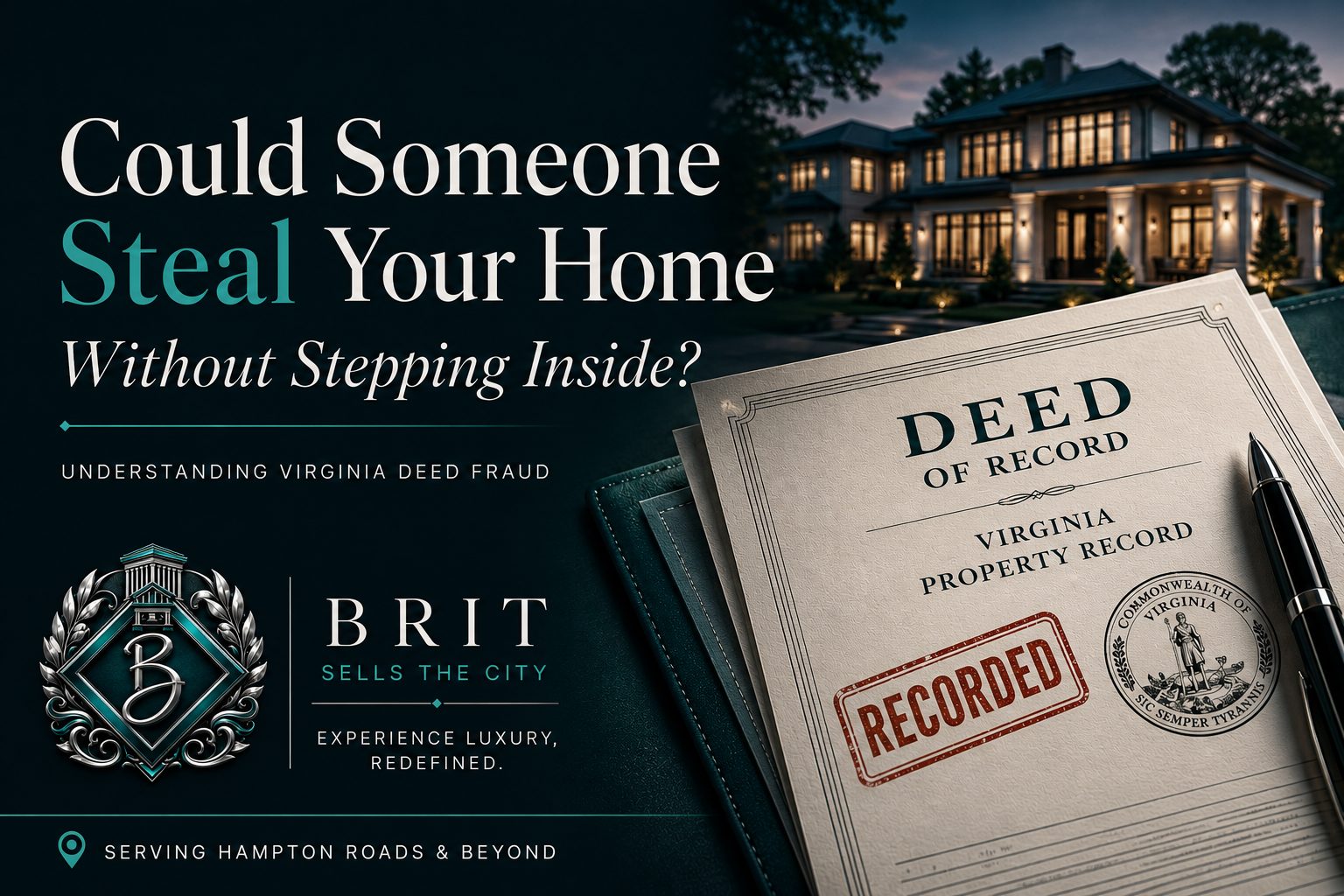
Could Someone Steal Your Home Without Stepping Inside?
What Virginia Homeowners Need to Know About Deed Fraud
Most homeowners worry about rising insurance premiums, property taxes, or mortgage rates.
Very few worry about someone stealing their home. Yet Virginia deed fraud is becoming an increasingly important concern for homeowners.
However, Virginia deed fraud is becoming a growing concern for homeowners and first-time buyers alike.
Not physically.
Legally.
On paper.
It sounds absurd until you realize it is already happening across the country.
That is exactly why Virginia launched VA Deed Alert, a free tool designed to help homeowners catch suspicious property filings earlier.
If you own property in Virginia or plan to someday, this is worth paying attention to.
Especially if you are a first-time buyer who assumes closing on a home means the hard part is over.
Sometimes, protecting ownership matters just as much as obtaining it.
What Is Deed Fraud?
Deed fraud happens when someone illegally files documents that make it appear they own property they do not actually own.
For first-time buyers, let’s simplify that.
Your deed is the legal document that proves ownership of your property.
Think of it as one of the core documents establishing:
This home belongs to you.
Deed fraud happens when someone attempts to manipulate that ownership through fraudulent paperwork.
That can include:
- forged deeds
- fake notarizations
- fraudulent ownership transfers
- unauthorized liens
- seller impersonation schemes
In some cases, criminals attempt to transfer ownership.
In others, they try to sell, rent, or borrow against a property they do not legally control.
Yes, really.
And the scary part?
Property records are public.
That transparency helps real estate function efficiently.
But it also creates opportunity for bad actors.
Scammers can research properties, identify potential targets, and look for vulnerabilities.
Predators love silence.
Why This Matters Beyond Virginia
While this is a national issue, Virginia deed fraud deserves local attention…
Deed fraud, title theft, and seller impersonation schemes are becoming a growing concern across the United States as property values rise and fraud tactics become more sophisticated.
According to the FBI Boston Field Office, quitclaim deed fraud increasingly targets:
- vacant land
- second homes
- inherited property
- mortgage-free homes
Why these properties?
Because criminals look for assets with:
- less oversight
- fewer physical visits
- slower communication
- delayed detection
In other words, they go where no one is watching.
Modern fraud can involve:
- identity theft
- stolen personal information
- forged IDs
- fraudulent notarizations
- AI-assisted document manipulation
- exploitation of public records
Technology has lowered the barrier to fraud.
That should concern every homeowner.
This Is Not Theoretical
This is not some far-fetched scam from a movie.
It is already happening.
In North Carolina, a homeowner discovered his vacation property had allegedly been transferred through a forged quitclaim deed and sold without his knowledge.
Estimated market value?
Roughly $300,000.
Recorded sale price?
Just $9,000.
The owner said:
“I never sold it and never will.”
One fraudulent filing created a massive legal mess involving ownership rights, title disputes, and litigation.
That is what makes deed fraud so dangerous.
The paperwork can appear legitimate until someone looks closely.
What Is VA Deed Alert?
Virginia’s new VA Deed Alert program is a free property monitoring system designed to notify homeowners when documents are recorded involving their name or property.
Think of it like fraud alerts for your credit.
Except for your house.
If a deed, lien, or related document gets recorded, the system sends an alert so you can investigate quickly.
That early warning matters.
Because when fraud happens, time matters.
The sooner suspicious activity is detected, the faster you can respond.
A Quick Devil’s Advocate Take
VA Deed Alert is a valuable tool, but it is not a magic shield.
Alerts can improve awareness, yet awareness alone does not prevent fraud. Homeowners still need to monitor mail, tax notices, title activity, and personal data security.
There is also a larger issue at play.
Real estate depends on public records for transparency and market efficiency, but that same transparency makes ownership information accessible to bad actors.
In many ways, deed fraud highlights a growing modern challenge:
How do we preserve public access while better protecting privacy and ownership security?
Why Virginia’s Response Matters
Virginia’s rollout reflects a national shift toward proactive fraud detection.
This is also part of a broader wave of policy changes affecting homeowners, including several recent updates I covered in my Virginia Housing Laws 2026 guide
Instead of waiting for victims to discover fraud months later, alert systems aim to create earlier awareness.
That matters because once fraudulent documents are recorded, reversing the damage can become expensive, time-consuming, and legally complex.
An important distinction many homeowners may not realize is this:
Recording a document is not the same as verifying the legitimacy of the transaction behind it.
In other words, just because paperwork gets filed does not automatically mean the underlying transfer was lawful.
That gap is exactly what fraudsters attempt to exploit.
Which is why monitoring matters.
Is VA Deed Alert Available Everywhere?
Not yet.
And this is the detail many homeowners may miss.
The program is rolling out statewide, but each locality must opt in through its Circuit Court Clerk.
That means availability varies depending on where your property is located.
For homeowners in Hampton Roads, it is worth checking whether your local court has joined.
How to Protect Yourself Right Now
Even if your locality has not fully adopted VA Deed Alert yet, there are practical ways to reduce risk.
1. Register for VA Deed Alert if Available
Official system:
VA Deed Alert Registration
2. Monitor Public Records
Periodically check deed records with your local clerk’s office.
3. Pay Attention to Strange Mail
Unexpected notices involving liens, ownership changes, loan statements, or tax issues should never be ignored.
4. Watch Higher-Risk Properties Closely
Vacant land, inherited property, rentals, and mortgage-free homes deserve extra oversight.
5. Protect Your Personal Information
Many fraud schemes begin with identity theft long before the forged deed appears.
My Take as a Real Estate Professional
Real estate is not just about buying and selling.
It is also about protection.
That philosophy is central to how I serve clients at Brit Sells The City
As a first-time buyer, it is easy to think the biggest hurdles are:
- getting pre-approved
- winning the offer
- making it to closing
Those are major milestones.
But homeownership does not end at closing.
Ownership comes with responsibility.
That includes protecting one of the largest assets you may ever own.
Risk exists long after the keys are handed over.
It simply changes.
That includes:
- title issues
- wire fraud
- identity theft
- deed fraud
Protection is part of ownership.
And education is part of protection.
Final Thoughts
Most people protect their home from visible threats.
They install cameras.
They lock doors.
They buy insurance.
But few think about protecting ownership itself.
That may be one of the biggest blind spots in modern homeownership.
Your home is not just real estate.
For many families, it represents:
- security
- stability
- leverage
- legacy
- generational wealth
And increasingly, one of the most dangerous threats to that asset may be invisible.
Not a storm.
Not a fire.
Not a break-in.
A filing.
If you are preparing to buy your first home or want guidance on protecting your real estate investment, connect with BSTC here
Disclaimer
This article is for educational purposes only and should not be considered legal, title, or financial advice. If you suspect fraudulent property activity, contact your local Circuit Court Clerk, title company, and attorney immediately.


