

 Facebook
 X
X
 Pinterest
 Copy Link
What If Cultural Access Is Part of Hampton Roads Growth?
Maybe growth is not only measured by what we build, but by how many people can find a piece of home here.
When we talk about Hampton Roads growth, most people would probably point to new neighborhoods.
New businesses.
New jobs.
A growing population.
But what if we’ve been measuring growth all wrong?
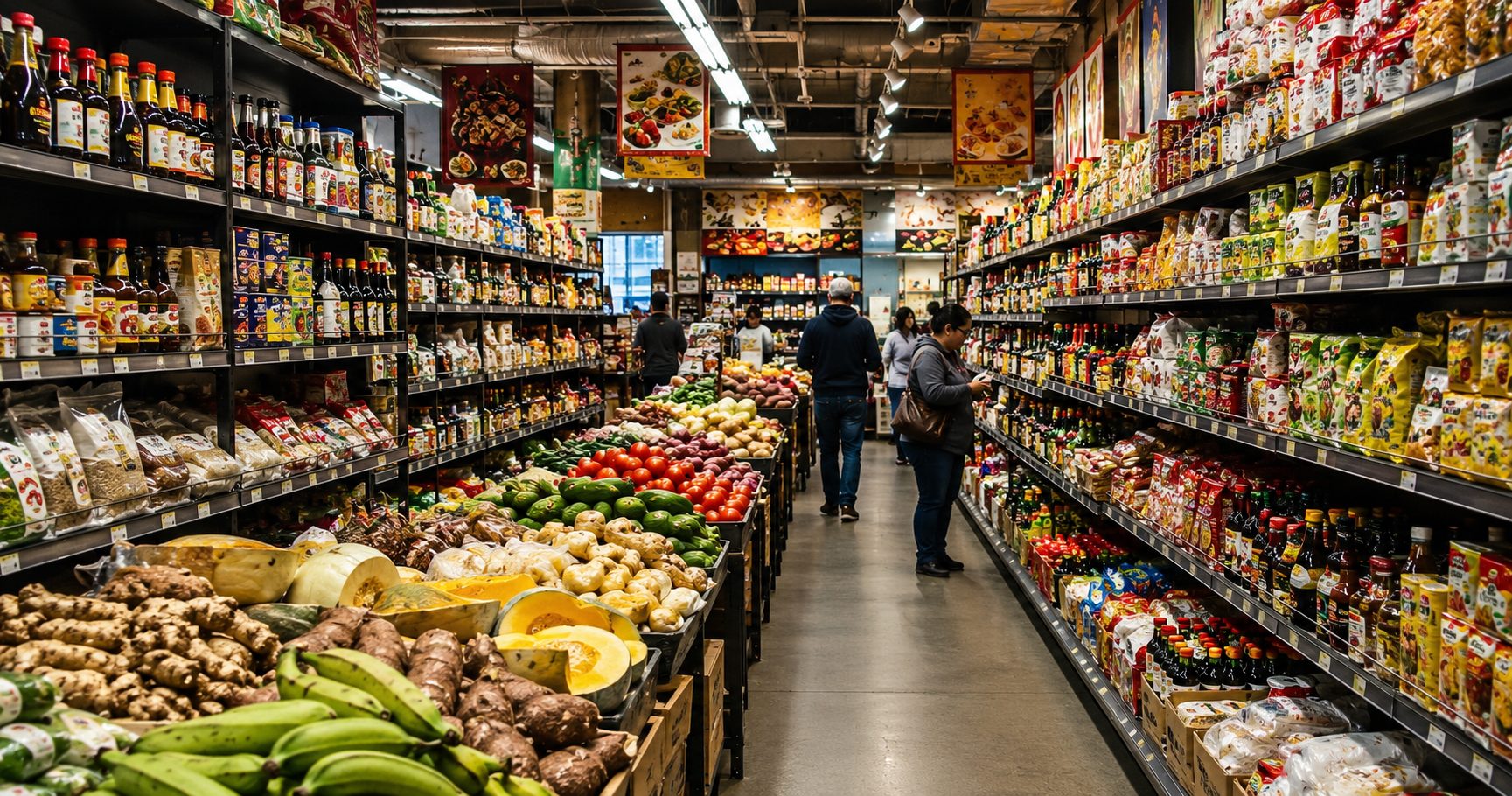
What if one of the clearest signs that a region has matured is whether someone can walk into a grocery store and find the ingredients that remind them of home?
Not because they’re a novelty.
Because they belong there.
A growing Hampton Roads shouldn’t just have room for more people.
It should have room for more cultures.
Food has always been one of the simplest ways people share who they are. Every aisle tells a story about the families who live here, the traditions they carry, and the communities they’re building.
Maybe the next sign that Hampton Roads is growing won’t be another subdivision.
Maybe it’ll be another aisle.
Think About Your Favorite Comfort Food
Now imagine moving hundreds or even thousands of miles away and realizing you can’t find the ingredients to make it.
For many families, that’s a reality.
That means having places where someone can buy Jamaican Scotch bonnet peppers, Korean gochujang, Nigerian egusi, Indian spices, Mexican pan dulce, Filipino ube, Middle Eastern za’atar, or authentic Chinese vegetables without feeling like they have to leave the region to find a taste of home.
For someone else, that same grocery aisle might be the first time they discover a new spice.
Taste a new dessert.
Learn the story behind a family recipe.
Or realize that what feels unfamiliar today has been someone’s tradition for generations.
Food can preserve culture for one family while introducing it to another.
Maybe that’s part of what growth looks like too.
What If Cultural Access Is Part of Growth?
We tend to talk about infrastructure in practical terms.
Roads.
Housing.
Schools.
Jobs.
Transportation.
The things a region needs to function.
But what about the places that help a region feel like home?
The neighborhood market that carries the spice someone’s grandmother always used.
The bakery making a dessert tied to a holiday another family has celebrated for generations.
The restaurant serving a dish that requires no explanation to one table and an entire conversation at the next.
Those places may not be infrastructure in the traditional sense.
But perhaps they tell us something about a region’s maturity.
I’ve asked before when we stopped knowing our neighbors. Maybe community isn’t only about knowing the person next door.
Maybe it’s also about noticing who lives there.
But Shouldn’t Businesses Simply Follow Demand?
Of course, there is another side to this conversation.
Some people believe businesses should simply follow demand.
If enough people want a particular cuisine or grocery store, the market will respond.
That’s a fair point.
No business can survive without customers.
But demand isn’t the only ingredient.
Commercial space.
Startup capital.
Distribution networks.
Specialty products.
Location.
Building a customer base.
Those challenges exist long before the first customer walks through the door.
Sometimes the people are already here.
The businesses just haven’t caught up yet.
And that raises another question.
How do we know there isn’t enough demand if people have already learned to drive farther, order online, substitute ingredients, or simply go without?
Sometimes absence means there is no market.
But could absence also teach people to stop asking?
Hampton Roads Is Already Connected to the World
Hampton Roads has never existed in isolation.
Military families arrive with experiences from across the country and around the world.
International students study throughout the region.
Healthcare professionals, engineers, shipbuilders, entrepreneurs, and families build lives here.
Virginia’s economic development profile describes Hampton Roads as a global gateway, while The Port of Virginia quite literally connects our communities to the world.
Maybe the global part of Hampton Roads isn’t somewhere beyond the water.
Maybe it’s already standing in line beside us at the grocery store.
What Does a Grown Up City Look Like?
Maybe it has a bigger skyline.
Better roads.
More jobs.
More development.
Those things matter.
But maybe maturity also looks smaller.
A familiar ingredient on a grocery store shelf.
A child seeing food from their culture treated as ordinary instead of unusual.
A family finding what they need for a holiday meal without turning the search into an all day trip.
None of those moments will appear in an economic development report.
There probably won’t be a ribbon cutting.
But perhaps we’ve been taught to look for growth in bigger places.
Cranes.
Construction.
Population reports.
New developments.
What if some of the clearest signs of a region’s maturity are found in the ordinary places where people live their everyday lives?
Maybe It’ll Be Another Aisle
Maybe home isn’t just the place where you live.
Maybe it’s the place where you no longer have to explain who you are.
So how do you know when a city has truly grown up?
Maybe the answer isn’t only found in its skyline.
Maybe the next sign that Hampton Roads is growing won’t be another subdivision.
Maybe it’ll be another aisle.
Luxury, Redefined.
Because the best communities don’t just make room for more homes.
They make room for more people to feel at home.


