 Facebook
 X
X
 Pinterest
 Copy Link
Have We Outsourced Childhood? Why Does It Cost So Much to Let Kids Be Kids in Hampton Roads?
Hampton Roads offers more opportunities for young people than many realize. But in solving one problem, have we quietly changed what childhood looks like?
Looking for free things to do with kids in Hampton Roads? You’ll find plenty of lists featuring parks, camps, museums, libraries, and community events. But what if we’re asking the wrong question?
Every generation seems to say the same thing.
“Kids don’t go outside anymore.”
“They’re always on their phones.”
“They need something productive to do.”
Maybe.
But here’s another question.
Where are they supposed to go?
If someone handed your family $25 this weekend…
Could you entertain four children for an entire day in Hampton Roads?
Where would you go?
Not for an hour.
Not until lunch.
For the entire day.
Especially if you have multiple children.
For many families, the issue isn’t that there is nothing to do.
It’s that much of what exists isn’t affordable, accessible, or designed with larger families in mind.
A trip to the movies can easily cost more than $100 for a family of five.
Arcades.
Trampoline parks.
Bowling.
Mini golf.
Restaurants.
Even “just getting out of the house” often comes with a price tag.
And if you have three or four children, every outing requires a family budget meeting.
Still, I don’t think money is the entire story.
I think it’s something much bigger.
Have We Outsourced Childhood?
I remember entire summers when my mother didn’t need to schedule my childhood.
The neighborhood handled that.
Maybe that’s why so many of us feel nostalgic for communities where everyone knew each other. A neighborhood wasn’t just a collection of houses. It was a network of people. We explored that idea more deeply in When Did We Stop Knowing Our Neighbors?, asking whether a neighborhood is measured by the homes inside it or by the people who would answer the door.
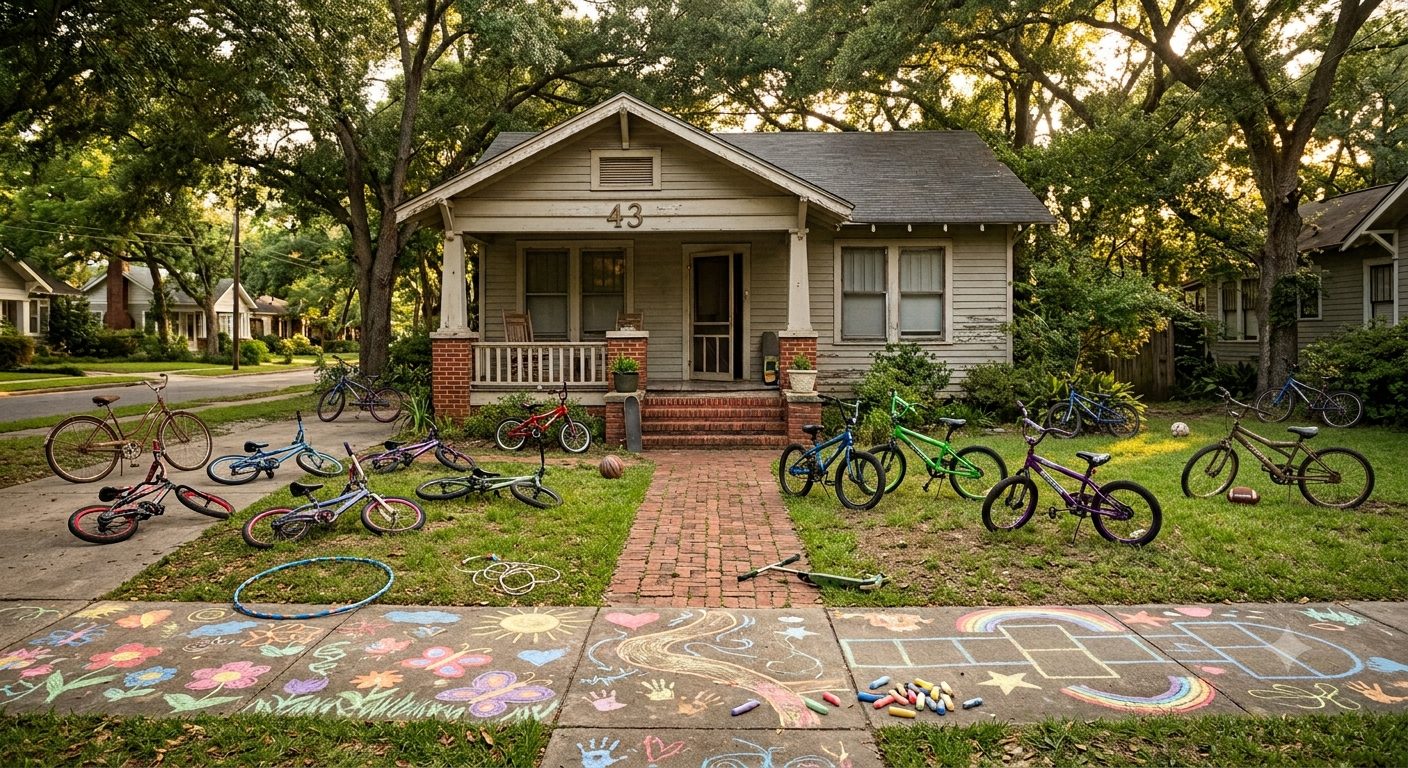
We’d leave the house after breakfast, find whoever was outside, or the house with all the bikes in the front yard.
Somehow, every single day became an adventure.
We didn’t come home until the streetlights came on.
No registration.
No admission fee.
No organized activity.
Just childhood.
Today, much of childhood feels different.
To be fair, our local governments haven’t ignored young people.
Across Hampton Roads, cities continue investing in recreation centers, public libraries, athletic leagues, neighborhood parks, summer camps, leadership programs, youth employment initiatives, and seasonal events. Organizations throughout our community spend countless hours creating safe places where children and teens can learn, compete, create, volunteer, and simply have fun.
Every park, community center, neighborhood, and gathering place tells a story about the people who use it. It’s a reminder that communities are shaped by far more than buildings, a theme we explored in Every House Has a Story: Do We See Every City the Same?
As a youth sports coach, I’ve watched organized activities transform children.
I’ve seen confidence grow.
Friendships form.
Leadership develop.
I’ve watched quiet kids discover their voice.
I’ve watched teammates become family.
Programs like youth sports, youth sailing camps, library programs, Teen Thursdays at Buckroe Beach, Night Jam Basketball, summer camps, and countless other initiatives across Hampton Roads matter.
They create opportunities.
They build confidence.
They create memories.
This article isn’t questioning their value.
They deserve to be celebrated.
Instead, I’m wondering something else.
Have we unintentionally begun expecting organized programs to provide what neighborhoods once gave away for free?
When Did Childhood Become a Schedule?
Has childhood become something that only exists when it’s organized?
Every activity has a registration.
A waiver.
A schedule.
An arrival time.
A pickup time.
An adult supervising every moment.
At the same time, there’s another solution we hear all the time.
Is Work the Only Answer?
“Get a job.”
And honestly…
It’s good advice.
Youth employment teaches responsibility.
Communication.
Financial literacy.
Time management.
Confidence.
A first paycheck can teach lessons no classroom ever could.
I support those opportunities.
But should work become our default answer every time a teenager has free time?
If a fifteen-year-old says they’re bored…
Do we immediately ask if they’ve applied for a summer job?
Or do we ask…
What are you curious about?
What do you want to build?
What do you want to create?
What are you passionate enough to lose track of time doing?
There’s a difference.
Some of history’s greatest ideas weren’t born during busy schedules.
They were born during long afternoons with nothing planned.
In garages.
Backyards.
Neighborhood basketball games.
Sketchbooks.
Tree forts.
Fishing trips.
Music sessions.
Long bike rides with no destination.
Boredom has always had an unusual relationship with creativity.
Given enough time…
Children invent games.
Build things.
Tell stories.
Solve problems.
Imagine worlds that don’t exist yet.
Today, boredom often feels like something we need to eliminate instead of something that can become imagination.
What Are We Really Measuring?
We measure grades.
Athletic performance.
Volunteer hours.
Scholarships.
Productivity.
Résumés.
College acceptance letters.
But we’ve become uncomfortable with free time that doesn’t produce something measurable.
And I wonder if we’ve accidentally stopped measuring wonder.
That question leads me to an even bigger question.
When did every stage of childhood become preparation for adulthood?
Elementary school prepares students for middle school.
Middle school prepares them for high school.
High school prepares them for college or careers.
Summer jobs prepare them for the workforce.
Internships prepare them for professional life.
Every step points toward becoming a productive adult.
But…
When are we preparing children for childhood?
Please don’t misunderstand.
This isn’t an argument against youth employment.
It isn’t an argument against organized sports.
It isn’t an argument against summer camps.
It isn’t an argument against recreation departments.
It isn’t an argument against libraries, coaches, teachers, volunteers, or the countless people who pour their hearts into creating opportunities for our young people.
Communities need recreation.
Families need affordable options.
Teenagers benefit from jobs.
Children benefit from organized activities.
I’ve seen that firsthand.
But children also need room to wander.
To imagine.
To create.
To fail.
To explore.
To get bored.
To solve problems without an adult handing them the answer.
To discover who they are before the world tells them who they should become.
Perhaps the real measure of a community isn’t just how many programs it offers.
It’s whether children still have room to experience wonder without someone asking what that experience will eventually lead to.
Free Things to Do with Kids in Hampton Roads
Looking for Things to Do?
If you’re looking for affordable or free opportunities for children and teens in Hampton Roads, these are great places to start.
Our cities are investing in youth through recreation programs, sports, camps, libraries, community centers, leadership initiatives, youth employment programs, free summer meals, and special events throughout the year. Many activities are free or offered at a reduced cost, and new opportunities are added regularly. Families looking for free things to do with kids in Hampton Roads often overlook many of the programs already available through local governments, libraries, and nonprofits.
Here are a few resources worth bookmarking:
Hampton
- City of Hampton Parks, Recreation & Leisure Services
- Hampton Parks Activity Catalog & Registration
- Hampton Youth & Opportunity
- Hampton Public Library Events
- Hampton City Schools Summer Meals Program
Newport News
- Newport News Parks, Recreation & Tourism
- Newport News Youth Programs
- Newport News Community Centers
- Newport News Public Library
- Newport News Public Schools Summer Feeding Program
Regional Resources
- Virginia Living Museum
- Virginia Air & Space Science Center
- Boys & Girls Clubs of the Virginia Peninsula
- YMCA of the Virginia Peninsulas
- Fort Monroe Authority Events
- Visit Hampton Events Calendar
These are only a starting point.
Nearly every city throughout Hampton Roads publishes recreation calendars, concerts, festivals, sports leagues, library events, farmers markets, neighborhood celebrations, and youth programming throughout the year.
Before assuming there’s nothing to do, it’s worth checking what’s already available in your own community.
If you’re new to Hampton Roads, our Untold Hampton Roads Homebuyer Starter Pack introduces many of the local traditions, landmarks, and community resources that make this region feel like home.
If this article encourages even one family to discover a new place, attend a free event, visit a library, or support a local youth program, then it’s done some good.
One Final Thought
This article isn’t meant to criticize our cities.
Quite the opposite.
Many local governments, nonprofits, volunteers, coaches, educators, librarians, faith organizations, and community leaders are investing countless hours into creating opportunities for our young people.
They deserve our gratitude.
Maybe the bigger question isn’t whether Hampton Roads has enough programs.
Maybe it’s whether programs have become responsible for something neighborhoods once provided naturally.
A neighborhood basketball game didn’t require registration.
A bike ride didn’t need a waiver.
A game of tag didn’t need a sponsor.
A summer afternoon didn’t need an itinerary.
Friendships didn’t begin because an event appeared on a calendar.
They began because someone knocked on a door.
Maybe the answer isn’t more programs.
Perhaps it isn’t fewer.
Even so, it’s neighborhoods where children don’t always need an organized activity to have an adventure.
Where being bored isn’t treated as a problem to solve.
Where curiosity matters just as much as productivity.
Where a child can spend an afternoon building absolutely nothing of measurable value…
…and still build a lifetime memory.
I still remember the house with all the bikes in the front yard.
We all knew what it meant.
Somebody was outside.
Childhood was happening.
Maybe that’s what I’m really wondering.
Communities are remembered through the stories people carry with them. It’s a reminder that history isn’t only made through major events. It’s also written in ordinary moments, a theme we reflected on in America at 250: One Nation. Millions of Stories.
Not whether our children have enough to do.
But whether we’re creating communities where they’ll one day have a house with all the bikes in the front yard to remember too.
Maybe one day they’ll tell their children about the summer they rode bikes until sunset.
The pickup basketball games that somehow lasted for hours.
The fort they built in the woods.
The sailing camp that sparked a lifelong passion.
The coach who believed in them.
The librarian who introduced them to their favorite book.
The first paycheck that taught them independence.
The neighborhood everyone gathered in.
Maybe the healthiest communities make room for all of it.
Because perhaps the greatest gift we can give our children isn’t simply preparing them for adulthood.
It’s giving them a childhood worth remembering.


