

 Facebook
 X
X
 Pinterest
 Copy Link
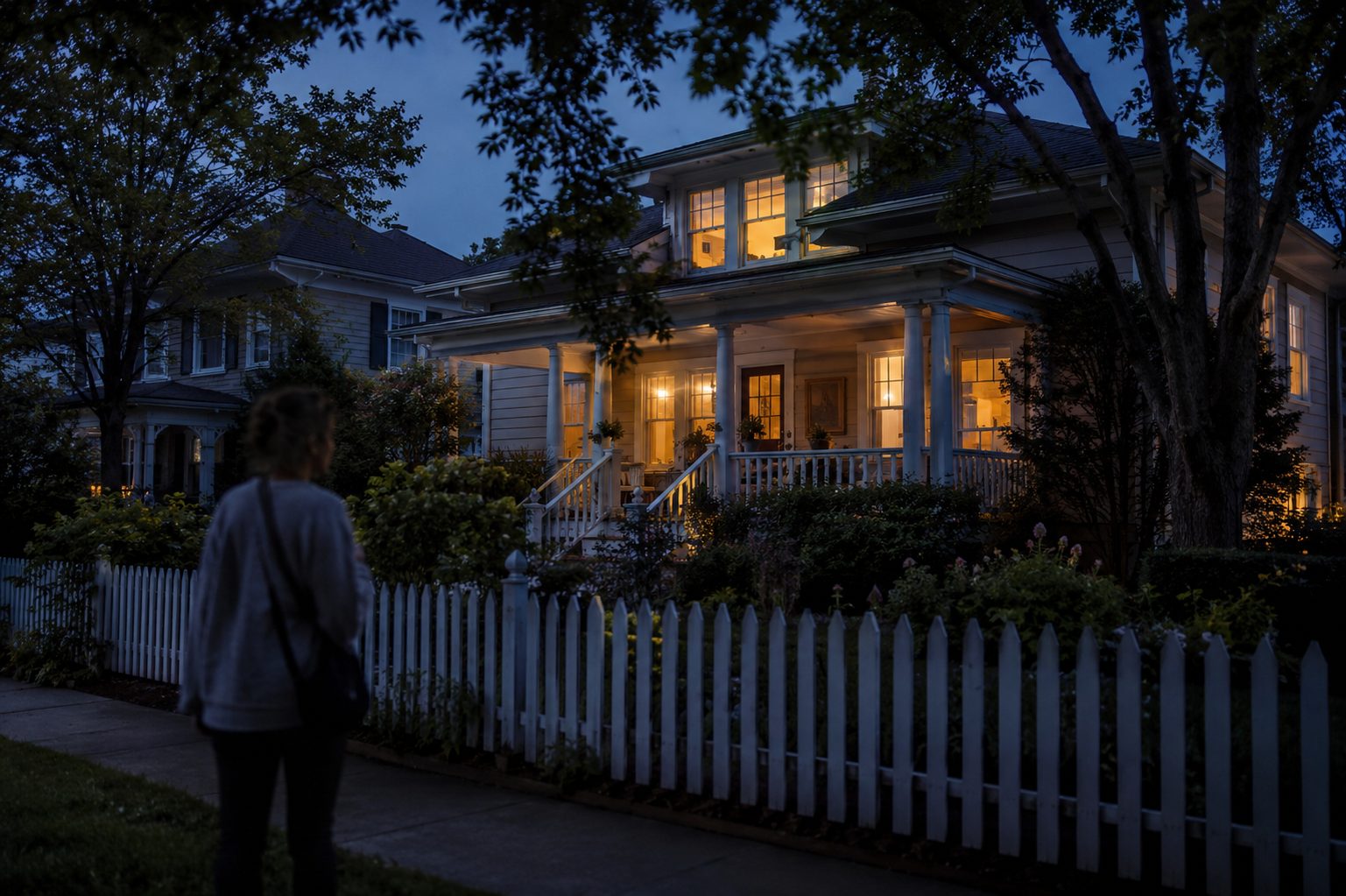
Why Do Complete Strangers Love Looking at Other People’s Houses?
Maybe houses have never been the destination. They’ve always been the doorway into someone else’s life.
Zillow.
Open houses.
Historic home tours.
Walking through beautiful neighborhoods on vacation.
Slowing down to admire a century old home on your evening drive.
For something so deeply personal, we spend an incredible amount of time looking at places where complete strangers live.
Why?
Why do complete strangers love looking at other people’s houses? At first glance, the answer seems simple. We appreciate beautiful architecture, enjoy decorating ideas, and imagine what life might be like inside. But that explanation only scratches the surface.
Maybe we’re just a little nosey.
That certainly explains some of it.
We’ve all noticed ourselves taking a second look through the front door of an open house or stealing a quick glance when a neighbor has their garage open.
But that can’t be the whole story.
If it were, places like Historic Jamestown, Colonial Williamsburg, the Newsome House Museum & Cultural Center, and the historic homes throughout Freemason Historic District wouldn’t continue drawing visitors year after year.
People don’t stand in those homes simply to admire crown molding or antique furniture.
They wonder who lived there.
How did they spend ordinary Tuesdays?
What conversations happened around that dining table?
Who stood on that porch waiting for someone to come home?
Curiosity may bring us to the front door.
The stories are what invite us inside.
Before We Know the People, We Read the House
Long before anyone tells us about the family who lives there, we begin making assumptions.
A wraparound porch suggests long conversations.
A well-worn garden hints that someone finds peace outside.
Children’s toys scattered across a yard tell a different story than perfectly trimmed hedges and a quiet driveway.
None of those assumptions are guaranteed to be true.
But our brains can’t help filling in the blanks.
We don’t simply see houses.
We instinctively begin creating the people who might live inside them.
We Don’t Imagine Owning the House
We Imagine Living the Life
Walk into a waterfront home.
You aren’t thinking about flood insurance.
You’re imagining coffee on the back deck.
Tour a historic Victorian.
You picture holiday dinners and traditions.
Step into a downtown loft.
Suddenly your life feels a little more creative.
A little more connected.
A little more adventurous.
As a Realtor, this is something I’ve watched happen countless times.
Buyers walk into a home with a list of non-negotiables.
No stairs.
Only newer construction.
Large backyard.
Open floor plan.
Then they walk into a house with the right feeling.
The atmosphere changes.
The checklist changes.
They stop talking about features and start talking about life.
“I can picture Christmas here.”
“My kids would love this.”
“This just feels right.”
They’re no longer evaluating a house.
They’re imagining a future.
Buying a home is about far more than finding the right number of bedrooms. If you’re ready to begin that journey, explore my guide for practical advice on navigating the home buying process with clarity and confidence.
That observation aligns with what researchers have long described: people naturally place themselves inside imagined stories and experiences. A home becomes the setting, and our minds begin writing the next chapter almost automatically.
Homes Quietly Communicate Identity
Where we live says something about us, whether we intend it to or not.
The neighborhood.
The architecture.
The front porch.
The garden.
The books on the shelves.
The art on the walls.
Homes become physical expressions of priorities, memories, routines, and aspirations.
Perhaps that’s why architecture captures our attention before we know anything else.
Recent Zillow data even shows that homes with distinctive architectural character consistently attract more views and engagement than more generic designs. Character draws us in before we ever read the property description.
Why Do We Love Looking at Other People’s Houses?
There’s another reason homes capture our imagination.
We’ve been taught that changing where we live can change how we live.
Fresh start.
Dream home.
Moving up.
New chapter.
Whether that’s always true is another conversation.
But culturally, we’ve tied place and possibility together.
Sometimes what we’re searching for isn’t another house.
It’s another version of ourselves.
The Devil’s Advocate
Of course, maybe none of this is that deep.
Maybe we simply appreciate beautiful architecture.
Craftsmanship.
History.
Interior design.
Not every Zillow scroll is an unconscious search for identity.
Sometimes a beautiful home is simply beautiful.
And that’s enough.
The BSTC Perspective
One of the most surprising lessons real estate has taught me is that buyers rarely fall in love with square footage.
They fall in love with a feeling.
For sellers, that’s an important reminder. Buyers rarely remember every feature, but they’ll always remember how a home made them feel. That’s why I believe selling with strategy means creating an experience, not just listing a property.
The vibe.
The atmosphere.
The way a home makes them imagine their life unfolding inside it.
I’ve watched buyers abandon wish lists they insisted were non-negotiable because one house simply felt different.
That isn’t really about real estate.
It’s about being human.
Final Thoughts
Maybe that’s why complete strangers love looking at other people’s houses.
Not because we’re searching for countertops.
Or floor plans.
Or even neighborhoods.
We’re searching for something much harder to describe.
A feeling.
The possibility that somewhere behind one of those front doors is a life that feels just a little more like the one we’ve been hoping for.
Maybe houses have never been the destination.
They’ve always been the doorway into someone else’s life.
Whether you’re searching for your first home, your next chapter, or simply exploring what’s possible, I’d be honored to help. Learn more About Brit and how I help buyers and sellers throughout Hampton Roads.
If you enjoyed this article, explore more BSTC editorials where real estate becomes a conversation about community, psychology, culture, and the way we live throughout Hampton Roads.


